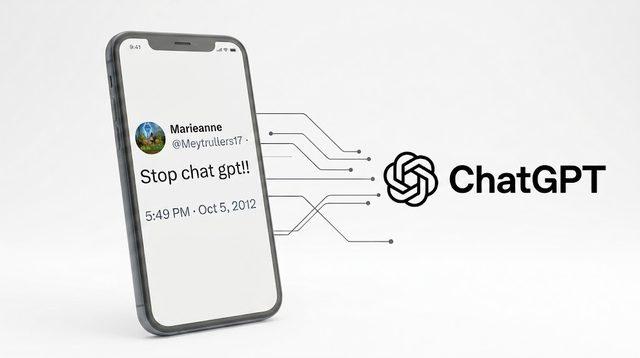
A tweet posted on October 5, 2012, by an Indonesian X (Twitter) user named "Marieanne" reading "Stop chat gpt!!" went viral on social media over claims that it predicted the future long before OpenAI was even founded and AI technologies were on the agenda. Made exactly 10 years before the launch of OpenAI's popular chatbot, this post is not a warning foreshadowing the AI era; rather, it is a digital illusion consisting entirely of linguistic abbreviations and coincidences.
The Background of the Mystery: Indonesian Messaging Slang and the "GPT" Abbreviation
This mystery, which garnered hundreds of thousands of interactions and fueled "time travel" theories, was solved when Indonesian users clarified the situation. Shortening words is quite common in everyday Indonesian messaging culture.
In the country, expressions like "ga penting" or "gak penting", which mean "never mind" or "pointless," are coded simply as "gpt" in digital correspondence. Therefore, the 2012 post was not a reaction to artificial intelligence, but rather the user's way of expressing frustration with pointless messages at the time, essentially meaning "Stop talking nonsense." Years later, OpenAI's decision to give its developed model the prefix "Chat" turned these two unrelated terms into one of digital culture's most popular coincidences.
Coincidences and Illusions in Digital Culture
Social media algorithms and internet communities are quite prone to generating new meanings by combining ordinary digital footprints from the past with current pop culture elements. The "Stop Chat GPT" incident is a clear example of how a linguistic abbreviation can overlap with a global tech term and how quickly internet folklore can spread, rather than being a technical prophecy.
Frequently Asked Questions
How was it proven that this 2012 tweet had no connection to artificial intelligence?
The situation became clear when Indonesian social media users explained that the local slang expression "ga penting" (pointless/unimportant) is abbreviated as "gpt."
How do such viral coincidences affect social media algorithms?
Content of this nature can boost user engagement and nostalgic sharing, paving the way for the rapid spread of misinformation or misunderstandings on platforms.
*This news is based on data published by Webtekno — Artificial Intelligence.
💬 Comments
No comments yet. Be the first!
You must be logged in to comment.
🔑 Log In