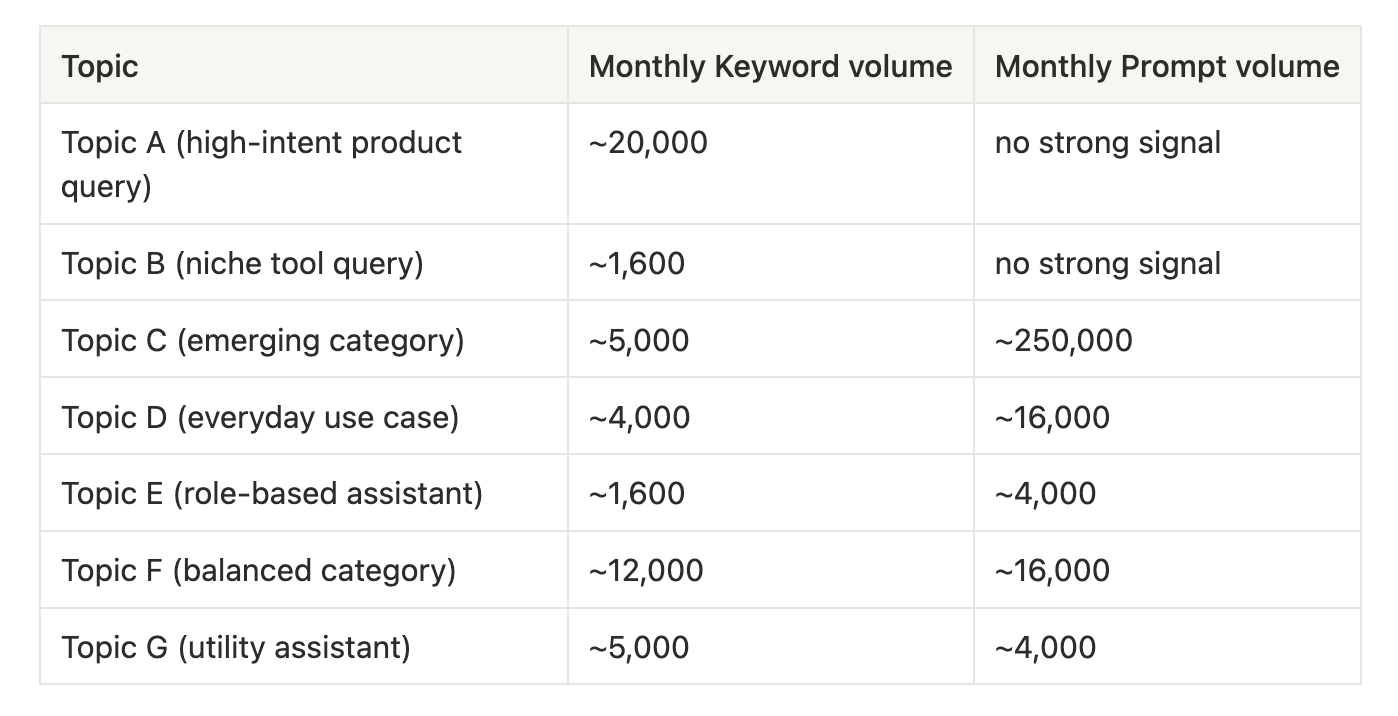
Combining traditional keyword research with the questions asked of artificial intelligence assistants (prompt demand) in a single table offers digital marketers a smarter and more comprehensive strategy for content prioritization. This approach bridges the gap between short phrases in search engines and long, sentence-like queries in AI tools, ensuring the correct determination of content formats.
Two Different Research Disciplines in a Single Table
When addressing new topics in SEO strategies, it is now necessary to examine two fundamental datasets together:
- Keyword Volume: Refers to the monthly search frequency of words users type into search engines. This data is obtained using Google Ads Keyword Planner alongside third-party tools such as Semrush or Ahrefs.
- Prompt Volume: Indicates the volume of questions users direct to AI assistants like ChatGPT, Gemini, Claude, and Perplexity. This data is acquired through specialized tools that model real prompt data, such as Profound.
While traditional tools combine close variants to provide a single metric, AI prompt volumes generally provide a more directional order-of-magnitude dataset. Bringing these two datasets together in the same table helps clarify the differences between search intent and generative AI interactions.
Using Data for Strategic Content Decisions
Industry Reflections
For digital marketing and SEO professionals, the integration of traditional search engine optimization and Generative Engine Optimization (GEO) disciplines sets a new standard in content planning processes. Separating topics with high search volume but weak prompt demand—and vice versa—supports more efficient resource utilization and the production of content in the correct format.
Frequently Asked Questions
In what way does prompt volume data differ from traditional keyword volume data?
While keyword volume provides exact search counts for short keyword phrases in search engines, prompt volume shows the directional order of magnitude for full-sentence queries written to AI assistants.
How does combining two different datasets in a single table affect the content production process?
This integration allows you to simultaneously see both what the target audience is searching for in search engines and what detailed problems they are trying to solve in AI tools, enabling you to correctly prioritize the format and depth of your content.
*This news report has been prepared based on data published by Search Engine Land.
💬 Comments
No comments yet. Be the first!
You must be logged in to comment.
🔑 Log In