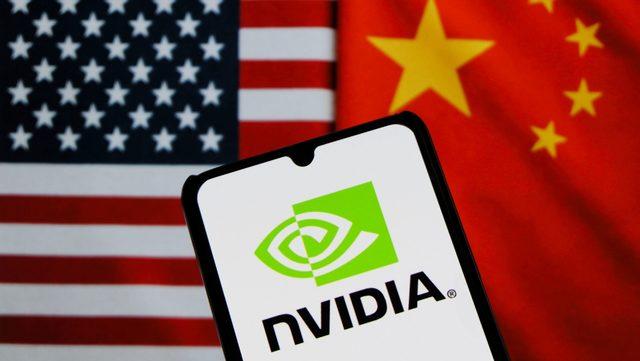
In a bid to help domestic artificial intelligence models compete with their US counterparts, Chinese authorities have allowed small batches of American-made Nvidia H200 AI chips—normally subject to strict restrictions—to enter the country. This strategic step makes it easier for tech giants like ByteDance and Tencent to access the massive processing power required to train their AI models, while carefully balancing foreign dependency with support for domestic manufacturing.
The Dynamics Behind Nvidia H200 Chips Entering China
Amid the ongoing tech rivalry between the US and China, Beijing has historically focused on reducing foreign reliance by backing domestic hardware manufacturers like Huawei. However, because local processors cannot yet fully match the immense processing power offered by US rivals during the AI model "training" phase, this flexibility became a necessity. Recent regulatory adjustments have reportedly delivered around 10,000 H200 processors each to tech heavyweights ByteDance and Tencent.
Beijing has not thrown the doors wide open; although the US side has approved sales of up to 100,000 H200 units per company, Chinese officials are keeping shipments limited by striking a delicate balance between techno-nationalism policies and market realities.
Which Technologies Are Permitted, and Which Remain Banned?
The permitted Nvidia H200 model lags at least two generations behind the company's newest architectural technologies. Due to Washington's stringent export controls, the sale of Nvidia’s most advanced Blackwell GPU series to China remains strictly prohibited. Nevertheless, compared to the H20 model previously cleared for import, the H200 delivers roughly six times higher performance, serving as a critical lifeline for Chinese AI laboratories.
Sectoral Implications
Such hardware flexibilities in the global AI market directly impact model development costs and timelines. Alleviating the hardware bottlenecks faced by Chinese AI startups could accelerate the training processes of large language models competing on the international stage. This once again highlights how political balances within the hardware supply chain directly shape the pace of software development.
Frequently Asked Questions
Why do Chinese companies need Nvidia chips instead of domestic processors?
While companies can use domestic chips without issue for standard operational tasks, they still rely on the large-scale parallel processing power and software ecosystem provided by Nvidia during the AI model "training" phase.
Does this clearance mean the US has completely lifted its tech embargo?
No. US bans and export restrictions targeting the most advanced Blackwell GPUs remain strictly in place, and older-generation chips like the H200 are only permitted to enter in limited batches.
*This news report was prepared based on data published by Webtekno — Artificial Intelligence.
💬 Comments
No comments yet. Be the first!
You must be logged in to comment.
🔑 Log In