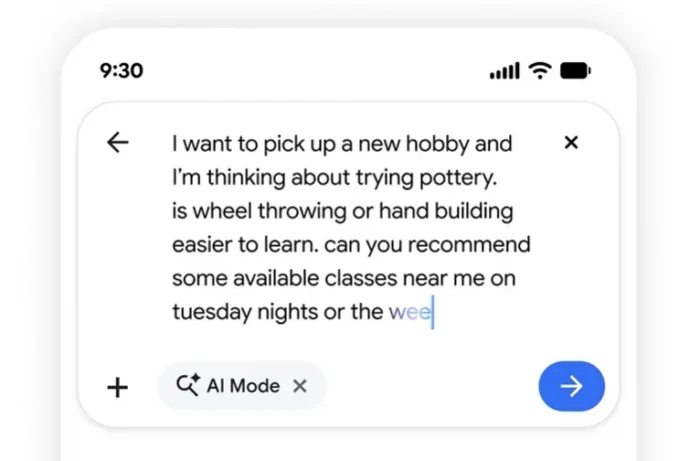
Google Search has announced its evolution into a fully AI-driven system, leaving behind the classic keyword-based search engine structure. According to announcements made during Google I/O 2026, the search interface has been redesigned with multi-input supporting AI tools, background-running information agents, and agentic search features. This shift has caused first-position click-through rates to drop from 27% to 11%.
What Does the New Search Experience Offer?
This radical transformation in Google's search interface fundamentally alters how users interact with the search engine. Powered by the Gemini 3.5 Flash infrastructure, the new Intelligent Search Box accepts text, images, files, video, and even open Chrome tabs directly as inputs. While the traditional auto-complete feature has been replaced by AI-powered intent suggestions, AI Overviews and AI Mode have been merged under a single roof.
Additionally, newly activated Information Agents monitor the web 24/7—even when users are not actively searching—synthesizing changing data and conducting background tracking. Agentic Search allows users to build custom tools, dashboards, and trackers directly within the search engine.
How Are Digital Marketing and SEO Strategies Affected?
The drop in organic first-position click-through rates from 27% to 11% clearly demonstrates that traditional SEO metrics and ranking-focused approaches are rapidly losing value. The primary priority for brands is no longer just ranking high on the search engine results page (SERP); it has become producing structured, authoritative, and intent-focused content that AI models and agents will reference.
Sectoral Implications
The shift in traditional web traffic habits in favor of AI summaries and background agents elevates the importance of content quality and technical SEO infrastructure to the highest level in digital marketing. Businesses and content creators will gain a competitive advantage by investing in data structures that directly respond to users' complex intents, support multi-format inputs, and can be easily crawled by AI algorithms.
Frequently Asked Questions
How are background-running information agents transforming the way websites acquire traffic?
Because information agents monitor the web 24 hours a day on behalf of users and directly synthesize data, the need for users to visit traditional websites decreases. This makes it mandatory for brands to be featured as sources or authoritative references in AI responses rather than driving direct traffic. What technical preparations does agentic search require in marketers' content structuring? Since agentic search allows users to set up custom tools and dashboards within search, content must be API-compatible, machine-readable, and enriched with schema markup (structured data).
*This news article was prepared based on data published by the Neil Patel Blog.
💬 Comments
No comments yet. Be the first!
You must be logged in to comment.
🔑 Log In