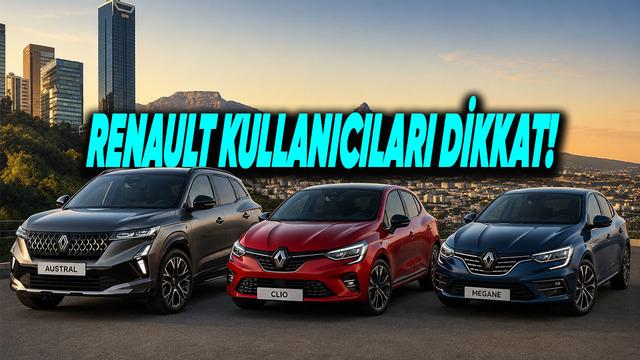
The turbo engines, dual-clutch transmissions, hybrid, and fully electric E-Tech architectures used in Renault models produced after 2020 require different driving habits compared to traditional vehicles. To ensure a long service life and trouble-free ownership for modern Renault vehicles such as the Clio, Captur, Austral, and Megane E-Tech, drivers must pay attention to several technical details ranging from engine warm-up cycles and transmission usage to regenerative braking and battery charging ranges.
Driving Habits for Modern Renault Engine and Transmission Systems
To ensure the efficient operation of the hardware and power units in current Renault models, the following points should be observed:
- Turbo Engines: Turbocharged engines featured in the 1.0 TCe, 1.3 TCe, and 1.2 E-Tech hybrid systems should not be subjected to high revs immediately after starting until the engine oil reaches its ideal temperature. Driving calmly during the first few kilometers reduces wear on the engine and turbo components.
- EDC Transmissions: In these dual-clutch transmissions, holding the vehicle on a hill with the accelerator pedal or crawling in traffic using a "half-clutch" method causes the clutch to overheat. Applying the brake fully in heavy traffic and activating the Auto Hold feature on inclines extends clutch life.
- Diesel Particulate Filter (DPF): To prevent clogging of the DPF found in 1.5 and 2.0 Blue dCi diesel engines, continuous short-distance driving should be avoided. Taking occasional long trips at a steady speed allows the filter to clean itself (regeneration).
Efficiency Recommendations for Hybrid and Electric Models
To protect range and battery health, users of electrified and fully electric Renaults should pay attention to the following factors:
- Regenerative Braking: In hybrid models like the Clio E-Tech, Captur E-Tech, Austral, and Rafale, releasing the accelerator pedal early instead of braking abruptly both accelerates battery charging and extends brake pad lifespan.
- Battery Charge Management: For fully electric vehicles like the Megane E-Tech Electric and Scenic E-Tech Electric, keeping the battery charged to 100% at all times during daily use is not recommended for battery health. Staying within a 20-80% charge range for daily routines and charging to full only before long trips is a better approach.
- Software Updates: Keeping track of software updates released through authorized service centers for multimedia, engine management, and driving support systems is important for performance improvements and resolving recurring issues.
Sectoral Reflections and Long-Term Use
The trend toward electrification and hybridization in the automotive industry forces drivers to adapt to software and battery management systems just as much as mechanical parts. Adopting driving habits suited to modern engine technologies not only preserves the vehicles' resale value but also prevents unexpected mechanical failures and high repair costs.
Frequently Asked Questions
Why is the lifespan of brake pads in Renault hybrids longer compared to traditional models?
The regenerative braking system in hybrid models uses the electric motor as a generator during deceleration, feeding energy back into the battery. Because less load is placed on the mechanical brakes (pads and discs) during this process, the wear rate is lower compared to traditional vehicles.
Why is the "80 percent rule" important for daily use in electric Renault models?
The cell chemistry of lithium-ion batteries degrades faster in terms of capacity loss when kept at maximum (100%) or minimum (0%) limits for extended periods. Keeping the charge between 20% and 80% during daily use maximizes battery life.
*This news article was prepared by Webtekno based on data published by Artificial Intelligence.
💬 Comments
No comments yet. Be the first!
You must be logged in to comment.
🔑 Log In