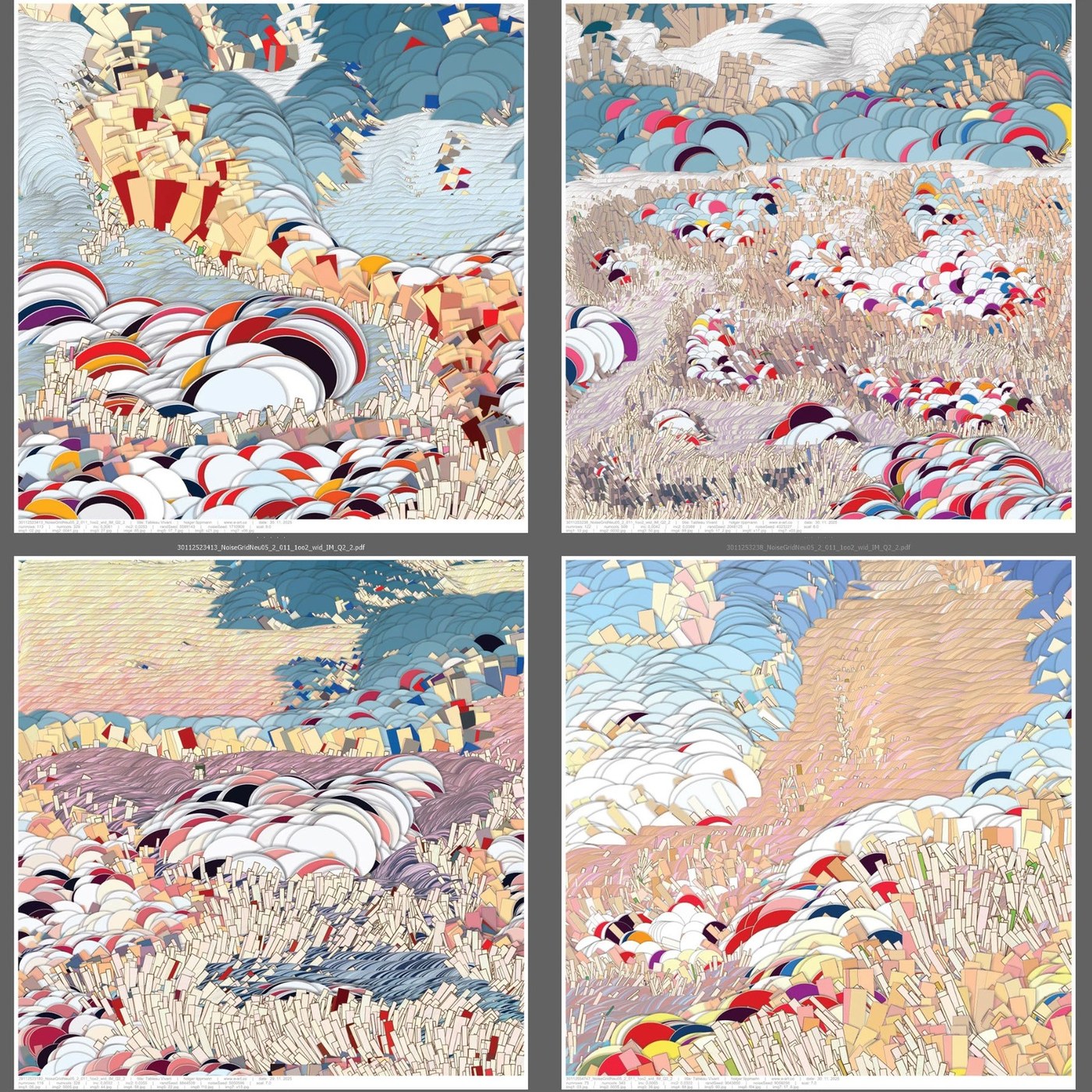
Created by Holger Lippmann, "Noise-Scape 2025" is a next-generation generative art project produced through complex algorithmic processes that push the boundaries of digital art and AI integration. Blending noise functions with the concept of digital landscapes, the work offers audiences a mathematically and aesthetically layered visual experience.
Key Features and Design Approach of the Project
Noise-Scape 2025 is built upon a hybrid creation process where randomness meets human control. Reinterpreting the traditional perception of landscape through digital codes and organic forms, Holger Lippmann highlights the following technical details:
- Algorithmic Depth: Utilizing complex mathematical models and noise algorithms, unique compositions are achieved in every single work.
- Texture and Color Palette: Dynamic color transitions and high-resolution texture layers are employed as the digital equivalents of natural elements.
- Interactive Perception: Rather than remaining static visuals, the pieces possess a fluid quality that evokes a sense of movement and depth in the viewer.
Reflections in the Digital Art World
In recent years, the generative art discipline has opened up brand-new avenues of expression for artists with the widespread adoption of AI tools and advanced algorithms. Lippmann's latest work represents the maturation phase of the artist's aesthetic relationship with code. For digital designers and curators, such projects serve as a concrete example of how software can evolve from a mere tool into a creative partner.
Sectoral Impacts and Considerations
Pioneering projects like Noise-Scape 2025 inspire professionals working at the intersection of visual arts and programming. For creative teams looking to integrate algorithmic logic into their design processes, such works stand as a vital reference point for balancing technical knowledge with aesthetic intuition.
Frequently Asked Questions
In what ways does the Noise-Scape 2025 project differ from traditional art techniques?
The project differs from traditional methods because it is created entirely using digital codes, mathematical algorithms, and noise functions rather than physical paint or brushstrokes; however, it aims to capture an organic flow in its aesthetic outcome.
How will such generative art projects influence future digital design trends?
By accelerating the widespread adoption of algorithmic and parametric design approaches, they will drive brands and artists toward dynamic, customizable, and code-based visual languages rather than static imagery.
*This news article was prepared based on data published by Abduzeedo.
💬 Comments
No comments yet. Be the first!
You must be logged in to comment.
🔑 Log In