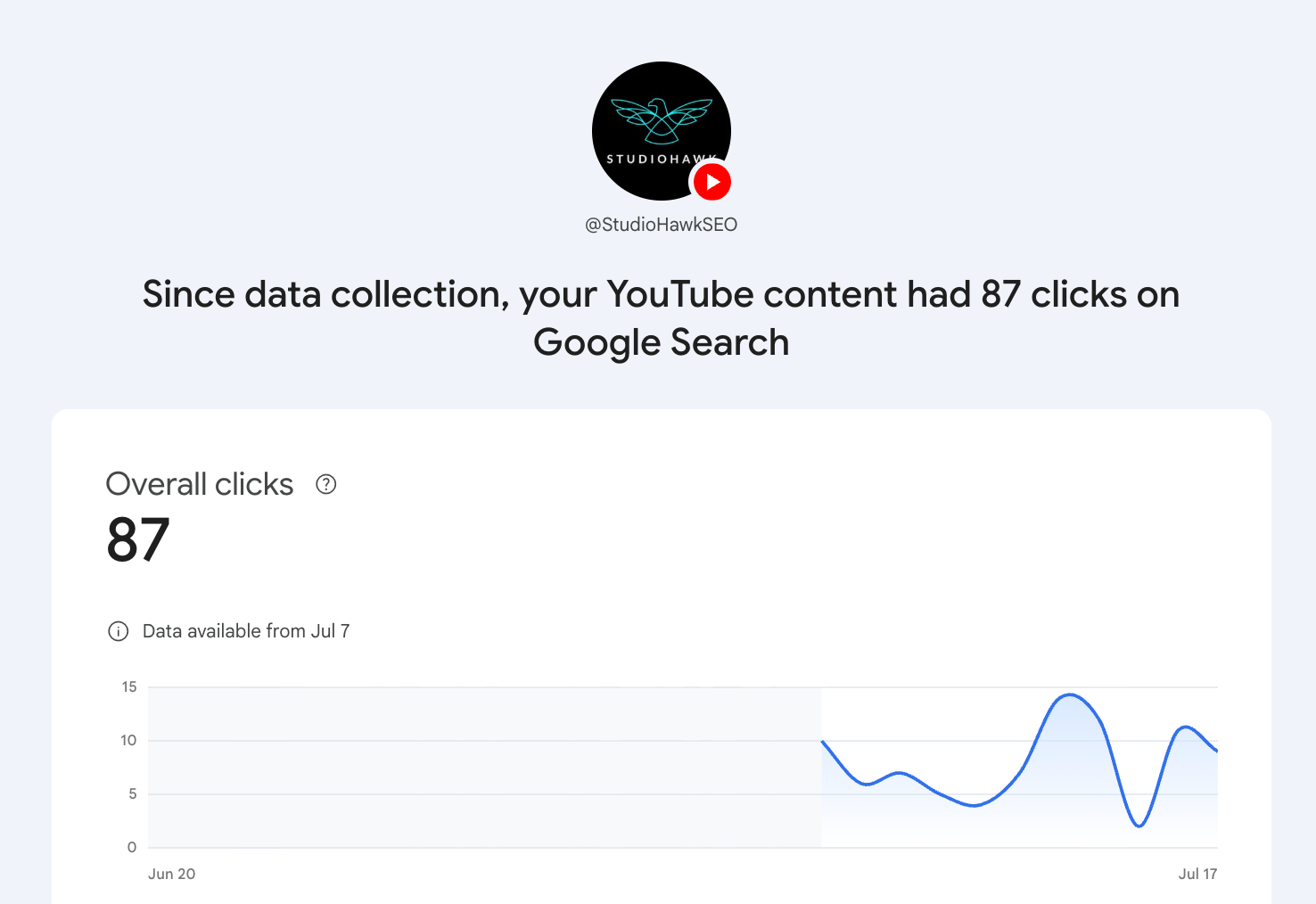
Google Search Console’s newly launched global "Platform Properties" feature now makes it possible to directly track the performance—including impressions, clicks, and ranking data—of content from social and video platforms like YouTube, Instagram, and TikTok within Google search results. This innovation makes it imperative for SEO teams to merge traditional search engine optimization with social media content strategies to build "social topic maps."
The Data Power and Impression Multiplier of Platform Properties
Google’s new reporting tool highlights the actual visibility of platforms within the search engine. For example, while a YouTube channel integrated with the new feature recorded 18,233 impressions on its first day, this figure exceeded 200,000 by the end of 11 days. However, click counts can remain at much lower levels. This clearly demonstrates that while the search engine matches the content with thousands of searches, video titles or thumbnails may not be optimized for search-driven clicks. Brands can now secure multiple placements on the Search Engine Results Page (SERP) not only through text-based websites, but also via their video and social media assets.
Multimodal AI Search and Multi-Format Competition
Google’s multimodal AI search systems, such as AI Mode, can directly read images and videos, derive sub-queries from them, and combine content in different formats into a single response. Traditionally, a brand producing only text-focused content competes for a single search slot; meanwhile, brands that combine their websites, videos, images, and social media posts under a unified strategy (utilizing a social topic map) can dominate multiple spaces for the very same search query. This shift dictates that video and social content planning must no longer be treated as a separate workflow, but rather as an integral part of a holistic SEO strategy.
Sectoral Reflections and Content Planning
It is no longer a preference, but a necessity, for digital marketing and SEO professionals to collaborate closely with social media teams. The titles, descriptions, and visual elements of YouTube, Instagram, and TikTok content must be re-optimized in light of search data provided through Google Search Console's platform properties. When accurate keyword and intent analyses are carried out on social platforms, the conversion rate of impressions derived from organic search volumes into click-through rates (CTR) can be significantly increased.
Frequently Asked Questions
Which social media platforms do the platform properties support, and where can the data be accessed?
The feature currently works by connecting YouTube channels, Instagram profiles, and TikTok accounts to Google Search Console, providing impression and click data for these platforms within search results.
How do social topic maps differ from traditional keyword research?
While traditional research focuses on web texts, social topic maps analyze how visual, video, and social formats appear in multimodal AI search results and how they fulfill user intent across different formats.
*This news article was prepared based on data published by Search Engine Land.
💬 Comments
No comments yet. Be the first!
You must be logged in to comment.
🔑 Log In