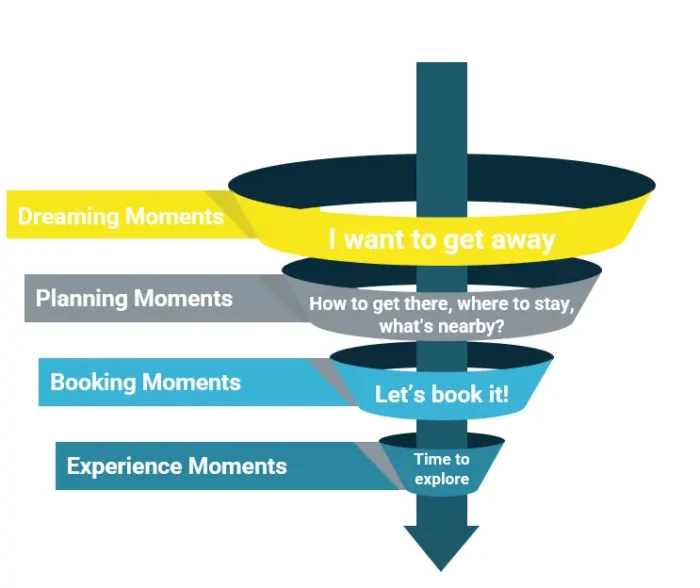
Boosting organic traffic and bookings on travel websites comes down to aligning content with travelers' four-stage journey—dreaming, researching, planning, and booking—while optimizing for AI-powered search engines and targeting long-tail keywords. According to data compiled by the Neil Patel Blog, maintaining a competitive edge in the travel industry now requires going beyond traditional search engine optimization (SEO) to secure visibility on AI tools such as ChatGPT and Google AI Overviews.
Building a Content Strategy Around Traveler Behavior
Travel consumers exhibit search behaviors that set them apart from users in other industries. The process typically begins with broad, inspirational searches—such as "best beach vacations in November"—and gradually evolves into high-intent, precise terms like "non-stop flights from JFK to Lisbon."
This reality requires brands to develop a comprehensive keyword map to connect with travelers at every moment of their journey. Instead of generic destination names, long-tail keywords that target specific activities, neighborhoods, and travel routes are the key to driving traffic that converts directly into bookings.
AI Search Engines and Technical Optimization
According to Phocuswright data, nearly 40% of U.S. travelers used generative AI tools for travel planning in 2025, marking a significant increase compared to the previous year. Users are increasingly turning to AI chatbots rather than traditional search engines to field their early-stage, "inspirational" queries.
To ensure that AI tools and search engines can cite brands as sources in this new ecosystem, the following technical elements must be prioritized:
- Schema Markup: Makes it easier for search engines to understand your content and travel details.
- Up-to-Date Reviews: Strengthens user trust signals.
- Trusted References: Backlinks from travel publications enhance authority.
Industry Implications and Long-Term Returns
Travel SEO is one of the rare digital marketing channels where efforts yield compound returns over time. A single, well-crafted destination guide can continue generating organic bookings for years. For digital marketers, this underscores the importance of building permanent, in-depth content libraries rather than relying solely on short-term campaigns.
Frequently Asked Questions
How should content on travel sites be structured for AI search engines (AI Overviews, ChatGPT) compared to traditional SEO?
While traditional SEO focuses on keyword density, AI optimization requires providing clear, direct, and structured answers to users' complex and early-stage queries (such as "Which city hosts a festival in which month?").
Why do niche and experience-focused keywords increase conversion rates compared to broad destination names?
Users searching for broad terms are still in the decision-making phase; however, users searching based on neighborhoods, events, or specific itineraries have clarified their travel plans and are much closer to booking.
*This article was prepared based on data published by the Neil Patel Blog.
💬 Comments
No comments yet. Be the first!
You must be logged in to comment.
🔑 Log In