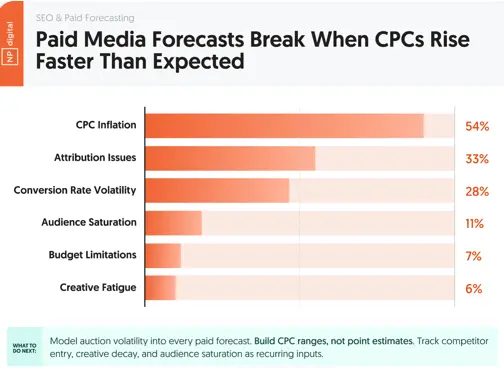
The primary reason paid media forecasts fail is not strategic error; rather, it is cost-per-click (CPC) inflation, conversion rate fluctuations, creative fatigue, and the unpredictable nature of AI-driven bidding systems. Building an accurate budget and performance forecast requires integrating realistic market adjustment variables into the model from the very beginning.
Why Performance Models Go Wrong
Advertising forecasts prepared by marketers frequently fall apart when confronted with real-world auction dynamics. Industry data clearly highlights the pressure points that contribute to forecasting errors:
- CPC Inflation (54%): Cost-per-click is driven entirely by auction dynamics rather than an advertiser's intent. Competitive pressure, changes in quality scores, and platform algorithm updates can push CPCs well beyond projections. This is the most common cause of forecast variance.
- Conversion Rate Volatility: Conversion rates do not remain static; they contract when buyer confidence drops and expand during periods of high demand. Assuming these rates will remain constant in models leads to inaccurate forecasts.
- Creative Fatigue: Visual and copy fatigue eventually causes a drop in CTR (click-through rate) and an increase in costs across every target audience.
- AI Bidding Algorithms: AI-powered bidding systems on platforms like Google and Meta reduce predictability. The impact of extra manual intervention is much more limited than most teams assume.
Building a Sustainable Forecasting Framework
A realistic paid media forecasting process should rely on sequential steps rather than random guesses. This framework consists of the following consecutive stages:
- Reach Estimation: Clearly define the campaign's potential audience volume and intra-platform competition intensity in the initial phase.
- Efficiency Modeling: Simulate cost efficiency by accounting for CPC inflation and potential creative fatigue rates.
- Profitability Calculation: Combine the resulting efficiency metrics with a margin for conversion rate fluctuations to determine the ultimate ROAS target.
Methods to Improve Forecasting Accuracy in Digital Marketing
Regardless of geographic limitations when planning digital marketing budgets, it is critical to factor the negative returns driven by the algorithm learning period during the initial weeks into the budget plan. As AI models collect data during the first few weeks of campaigns, costs may temporarily rise; forecasts that fail to account for this ramp-up period exhaust expectations before the campaign even fails.
Frequently Asked Questions
Why do AI-driven bidding strategies make advertising forecasting more difficult?
Because AI algorithms make dynamic decisions based on real-time auction signals, they reduce the impact of human intervention and lead to cost fluctuations that cannot be predicted from the outside using traditional formulas.
How can budget losses during the first few weeks of a newly launched ad campaign be prevented?
The first few weeks should be accepted as a learning period—or ramp-up phase—during which platform algorithms gather data, and potential negative returns and temporary cost spikes during this process must be incorporated into the budget planning from the start.
*This report was prepared based on data published by the Neil Patel Blog.
💬 Comments
No comments yet. Be the first!
You must be logged in to comment.
🔑 Log In