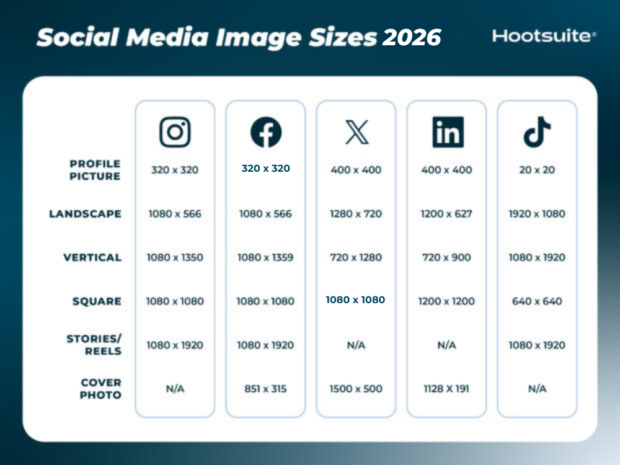
As of 2026, keeping up with the latest image dimensions for major social media platforms such as Instagram, Facebook, X (formerly Twitter), LinkedIn, and TikTok is critical to ensuring content displays correctly within platform algorithms and prevents drops in engagement rates. According to the most recent data, while a 1080-pixel width standard is generally maintained across platforms for feed and full-screen formats, square visuals are increasingly being replaced by vertical, mobile-first formats.
Current Pixel Dimensions by Platform
For social media managers and designers, each network has its own specific standards for profile pictures, feeds, stories, and cover images:
- Instagram: Profile picture 320 x 320 pixels, landscape posts 1080 x 566 pixels, vertical posts 1080 x 1350 pixels, square posts 1080 x 1080 pixels, and Stories/Reels 1080 x 1920 pixels.
- Facebook: Profile picture 196 x 196 pixels, landscape feed image 1080 x 566 pixels, vertical posts 1080 x 1359 pixels, square posts 1080 x 1080 pixels, Stories/Reels 1080 x 1920 pixels, and cover photo 851 x 315 pixels.
- X (Twitter): Profile picture 400 x 400 pixels, landscape image 1280 x 720 pixels, vertical image 720 x 1280 pixels, square image 720 x 720 pixels, and cover photo 1500 x 500 pixels.
- LinkedIn: Profile picture 400 x 400 pixels, landscape post 1200 x 627 pixels, vertical post 720 x 900 pixels, square post 1200 x 1200 pixels, and company/cover image 1128 x 191 pixels.
- TikTok: Profile picture 20 x 20 pixels, vertical video/image content 1080 x 1920 pixels, landscape ad visuals 1920 x 1080 pixels, and square ads 640 x 640 pixels.
Key Considerations for the Design Process
Because social media visual algorithms are updated frequently, brands and creators can boost operational efficiency by using flexible design tools rather than rigid templates. Opting for vertical aspect ratios—such as 4:5 and 9:16—especially for feed content directly improves the mobile user experience and positively impacts reach rates. To prevent cropping and loss of quality caused by dimension shifts, leveraging automation-powered resizing tools can significantly speed up workflows.
Frequently Asked Questions
Does using incorrect image sizes directly reduce social media reach?
Yes. Platform algorithms assume that visuals failing to match proper aspect ratios or suffering from automatic edge cropping negatively impact the user experience, which can lead to a drop in reach and engagement metrics.
What is the most practical way for social media management teams to adapt to constantly changing dimensions?
Rather than tracking platform updates manually, teams can integrate design and automation tools that support cross-network, simultaneous resizing (such as integrated solutions like Perch by Hootsuite) into their workflows to maintain brand consistency.
*This report is based on data published by the Hootsuite Blog.
💬 Comments
No comments yet. Be the first!
You must be logged in to comment.
🔑 Log In