Social media analytics tools are software solutions that enable brands to monitor and report on their social media performance, audience engagement, and campaign results from a single hub, while empowering them to make strategic decisions. According to data published by the Hootsuite Blog, these tools go beyond basic metrics to help translate raw data into business outcomes, conversions, and return on investment (ROI).
The 4 Core Types of Social Media Analytics
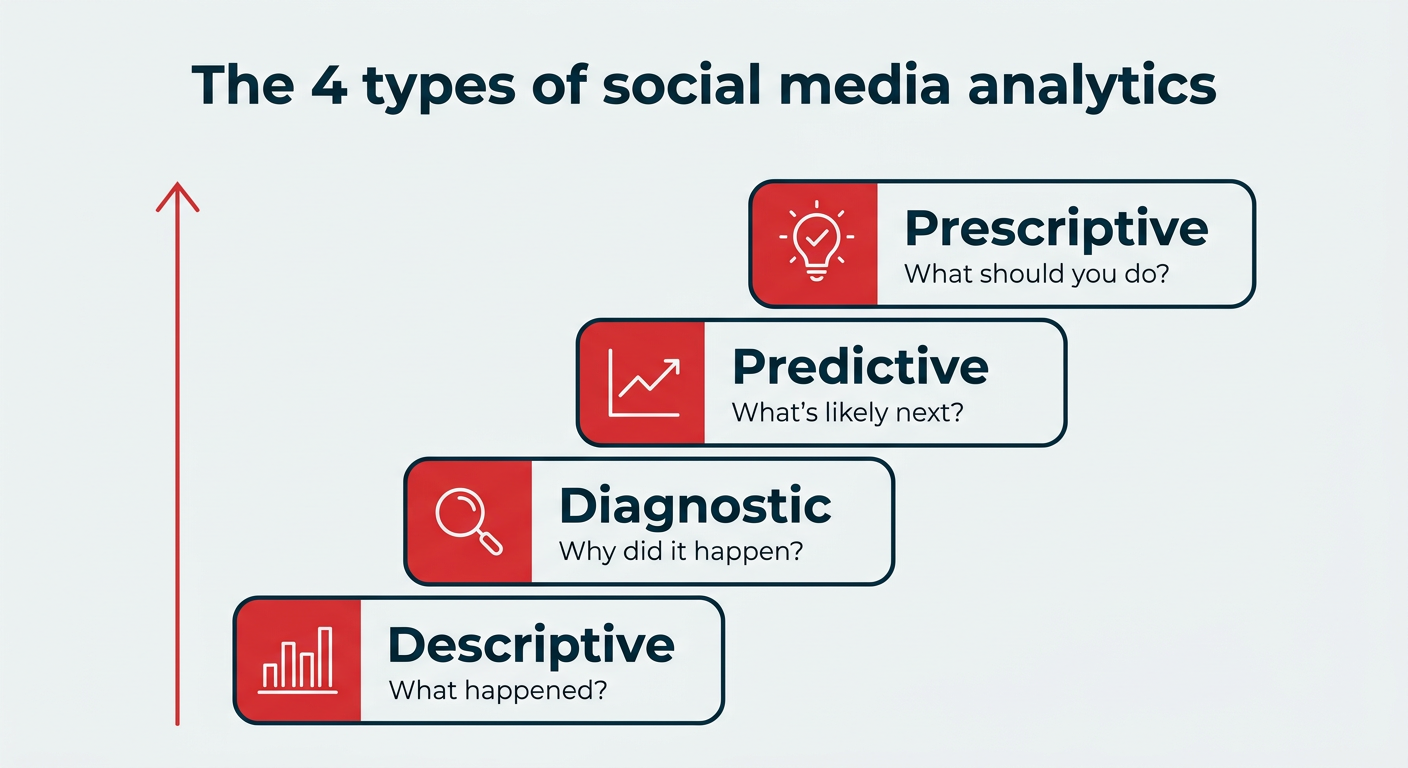
Modern analytics tools are divided into four main categories to evaluate your performance from different angles, spanning the past to the future:
- Descriptive Analytics: Answers the question, "What happened?" It covers fundamental metrics summarizing past performance, such as reach, engagement, and follower growth.
- Diagnostic Analytics: Pursues the question, "Why did it happen?" It examines the reasons behind the numbers, analyzing which content types or posting times drove increases in engagement.
- Predictive Analytics: Focuses on the question, "What is likely to happen next?" Using historical data and trends, it offers insights into the best times to post or future content performance.
- Prescriptive Analytics: Turns data into action by recommending the most accurate steps for budgets and strategy.
Key Factors to Consider When Choosing the Right Tool
When selecting the most suitable analytics tool for a business, one should not focus solely on instantaneous engagement figures. It is critically important that the chosen platform can integrate with existing software infrastructure, offer cross-platform reporting, and feature customizable dashboards. Spanning a wide spectrum—from free native platform statistics to full-scale social media operating systems—these tools must transform data heaps into manageable decisions.
Industry Implications and Strategic Takeaways
During this period when digital marketing budgets must be optimized, brands that fail to tie social media data to business outcomes run the risk of wasting resources. Teams using tools equipped with predictive and prescriptive analytics features can move away from intuitive approaches and develop data-driven strategies, which directly enhances budget efficiency.
Frequently Asked Questions
What is the main difference between free native platform analytics and paid, comprehensive tools?
Native analytics only provide data from within that specific platform (e.g., Instagram or LinkedIn). Comprehensive paid tools, on the other hand, consolidate multiple platforms onto a single screen, provide AI-powered insights, and correlate data with CRM or sales outcomes.
Which features should small businesses prioritize when choosing a social media analytics tool?
Rather than complex and expensive systems, small businesses should opt for scalable tools that allow them to easily track key performance indicators (KPIs), generate quick reports for stakeholders, and fit their current budgets.
*This news report has been prepared based on data published by the Hootsuite Blog.
💬 Comments
No comments yet. Be the first!
You must be logged in to comment.
🔑 Log In