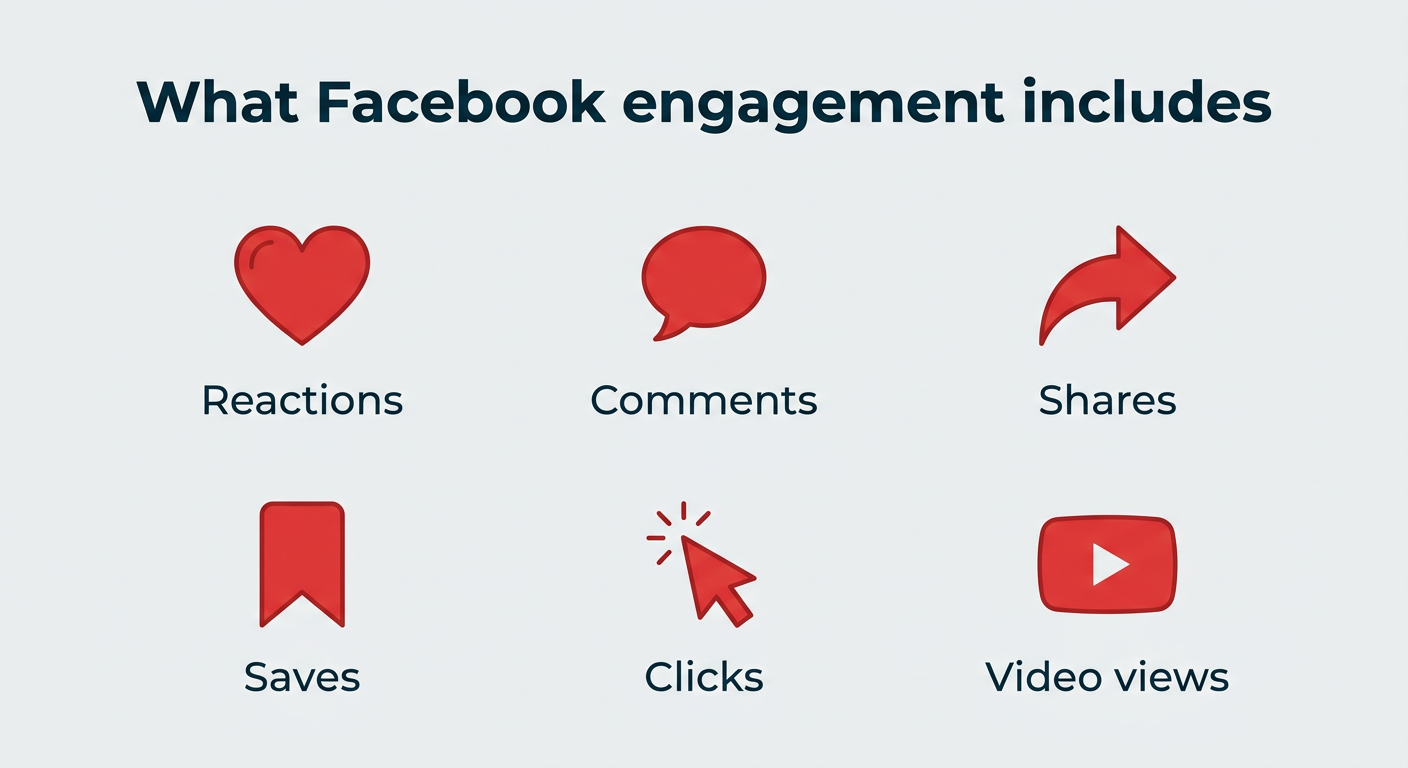
According to data from the Hootsuite Blog, Facebook engagement encompasses both active and high-engagement user reactions—such as likes, comments, shares, saves, clicks, and video views. High engagement prompts the algorithm to repeatedly push your content to wider audiences. In 2026, the key to boosting organic reach on the platform lies in focusing on short-form videos (particularly Reels), user-generated content, and community-driven posts.
The Role and Importance of Engagement in the Facebook Algorithm
The success of content shared on Facebook directly depends on the quality and volume of user reactions. When a post receives likes, comments, or shares, the algorithm interprets this as a signal that the content is valuable, pushing it higher up in the feed.
For marketers, engagement rates are no longer just a "vanity metric"; they have evolved into tangible, reportable performance indicators for business. Research shows that more than one-third of marketers position Facebook as the most crucial social media platform for their strategic efforts. Low engagement rates serve as a clear warning sign that content formats or strategies need an urgent overhaul.
Industry Implications and Strategic Approach
As social media marketing and digital strategies rapidly evolve on a global scale, closely tracking platform algorithm updates is vital. When shaping their 2026 strategies, brands and creators are expected to move away from one-size-fits-all posting templates and pivot toward video-heavy, dynamic models that trigger community interaction. Supporting performance tracking with industry benchmark tools makes it easier to execute correct strategic moves.
Frequently Asked Questions
Which content format should be prioritized first to increase low engagement rates on Facebook?
According to 2026 data, short-form videos (Reels), community-driven posts, and user-generated content (UGC) stand out as the formats that drive the highest organic engagement.
How do industry engagement benchmarks contribute to a marketing strategy?
Tracking competitor and industry averages allows marketers to assess their current performance levels, pinpoint missing or inefficient areas in their strategy, and optimize their budget and time accordingly.
*This article was prepared based on data published by the Hootsuite Blog.
💬 Comments
No comments yet. Be the first!
You must be logged in to comment.
🔑 Log In