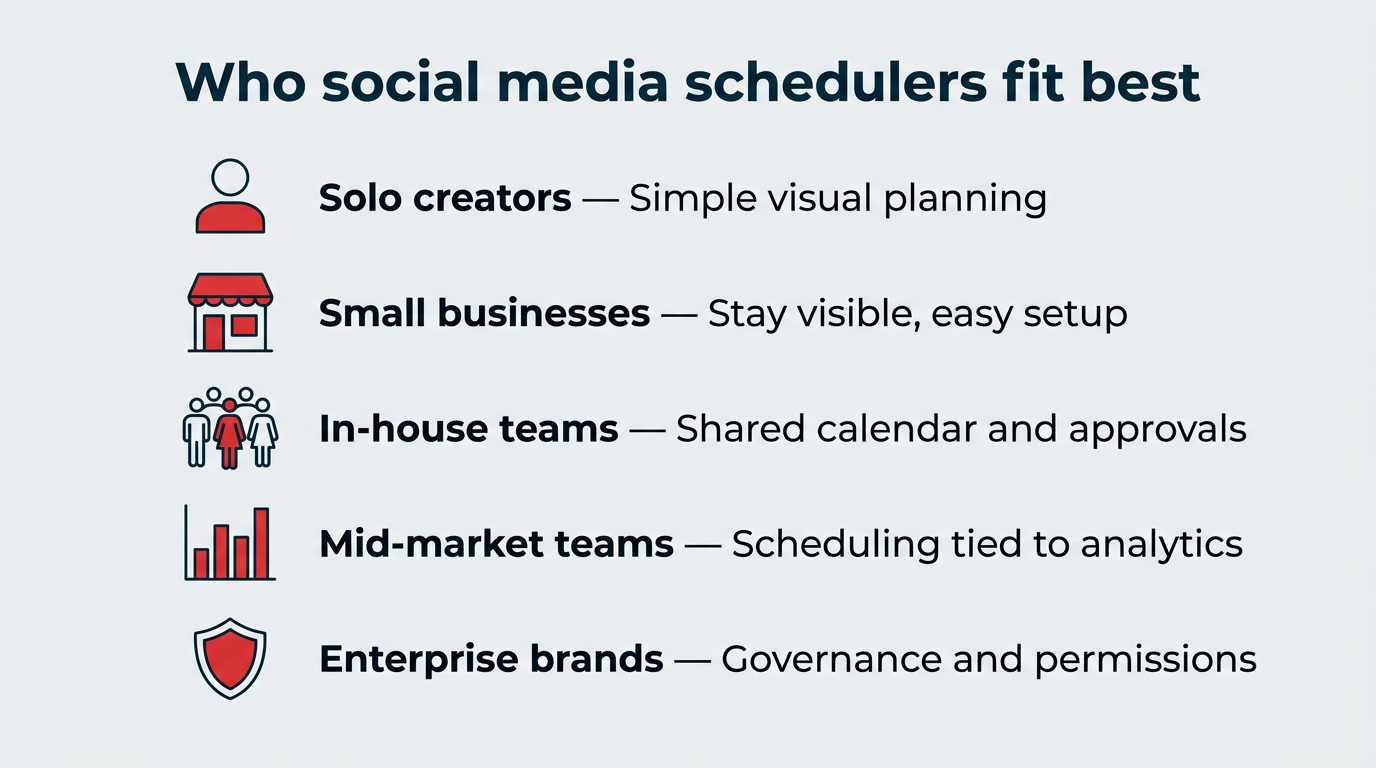
Social media scheduling tools allow you to plan, create, and automatically publish content across multiple platforms from a single centralized dashboard. Equipped with AI-driven features as of 2026, this software is transforming digital marketing processes through capabilities such as suggesting optimal posting times, drafting content, and automatically analyzing performance data.
Key Features to Consider When Choosing a Tool
Choosing the right social media management platform for teams of various sizes and individual users is a strategic step. The following criteria should be prioritized during the decision-making process:
- Multi-Platform Support: The ability to simultaneously schedule content for different social networks from a single screen.
- Approval Workflows: Hierarchical structures that ensure content goes through necessary reviews before publication, particularly useful for agencies and large teams.
- AI Integrations: The automated generation of content drafts and system-determined optimal posting times based on audience engagement, enabled by modern tools like Perch by Hootsuite.
- Comprehensive Analytics: The capacity to aggregate post performance, reach rates, and engagement metrics into a single unified report.
The Difference Between Third-Party Software and Native Tools
Free native schedulers offered by platforms like Meta Business Suite may suffice for basic publishing needs. However, professional teams managing multiple brands, accounts, or channels require third-party social media management software for advanced reporting, detailed user permissions, and cross-channel control.
Industry Implications
The adoption of automation tools in social media management eliminates manual operational burdens, increasing the time dedicated to strategic planning and creative content production. In particular, the widespread use of AI-based recommendation systems makes it easier for brands to reach their target audiences at the precise right moment using data-driven approaches.
Frequently Asked Questions
Why should one choose a paid social media tool instead of free native schedulers?
While native tools manage basic posts within a single ecosystem, paid third-party tools offer multi-brand management, advanced team collaboration, approval workflows, and in-depth analytical reports that consolidate all channels.
In which areas does artificial intelligence stand out for social media planning tools in 2026?
Artificial intelligence plays an active role in automatically detecting optimal posting times for maximum engagement, generating text drafts, and directly correlating published data with performance outcomes.
*This news report has been prepared based on data published by the Hootsuite Blog.
💬 Comments
No comments yet. Be the first!
You must be logged in to comment.
🔑 Log In