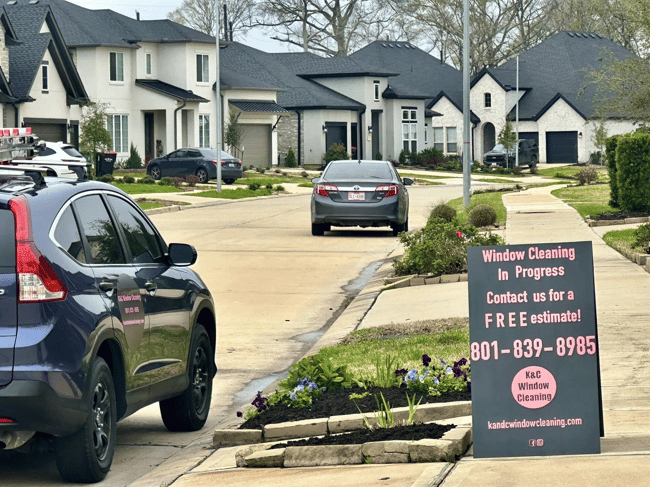
In digital marketing and local business strategies, subtle messaging that leverages the psychology of "social proof" rather than aggressive, direct-sales slogans boasts a much higher success rate in persuading consumers. A simple window-washing sign on a Houston street and Robert Cialdini’s hotel towel study clearly demonstrate that consumers naturally accept the actions of others as a point of reference.
The Psychological Impact of Pressure in Communication
In the marketing world, assertive and pressuring statements such as "we are the best" or "we are the most popular" do not always yield the desired effect; instead, they can trigger a sense of manipulation among consumers. The simple phrase "Window cleaning in progress" used on a local Houston window-washing company's sign avoids a direct sales pitch, instead reminding potential customers that other people around them are already utilizing the service. While this approach allows consumers to feel free during their decision-making process, it mentally triggers the perception that "since other people are having it done, they must know something."
The Scientific Basis of Social Proof: The Cialdini Study
A 2008 hotel towel experiment conducted by renowned researcher Robert Cialdini numerically revealed how human behavior is influenced by the social environment. While standard environmental appeals ("help protect the environment") achieved a 35% towel reuse rate, the message "the majority of guests reuse their towels" increased this rate to 44%. When the message was narrowed down specifically to "most guests who stayed in this room," participation reached approximately 50%. These findings demonstrate that the tendency toward social conformity and location- or situation-specific social proofs directly enhance persuasive power.
Strategic Takeaways and Application
The key takeaway for marketers and digital strategists is to present organic evidence that consumers can process through their own reasoning, rather than attempting to directly steer them. Instead of proclaiming oneself the "best agency," transparently and unassumingly sharing active projects, ongoing work, or current success stories creates a much more lasting impact on increasing conversion rates in digital marketing campaigns.
Frequently Asked Questions
Why should seemingly more passive social proof messages be preferred over aggressive sales slogans?
Because when consumers feel they are being directly targeted or subjected to sales pressure, they develop psychological defense mechanisms; social proof, on the other hand, breaks down resistance by making the choice feel like the individual's own decision.
How can an approach like "Window cleaning in progress" be adapted for websites or social media in digital marketing campaigns?
A similar social trigger can be created without using direct advertising language by incorporating real-time, transparent activity notifications on websites, such as "X people are currently viewing this product" or "50 people purchased this service today."
*This article was prepared based on data published by the HubSpot Blog.
💬 Comments
No comments yet. Be the first!
You must be logged in to comment.
🔑 Log In