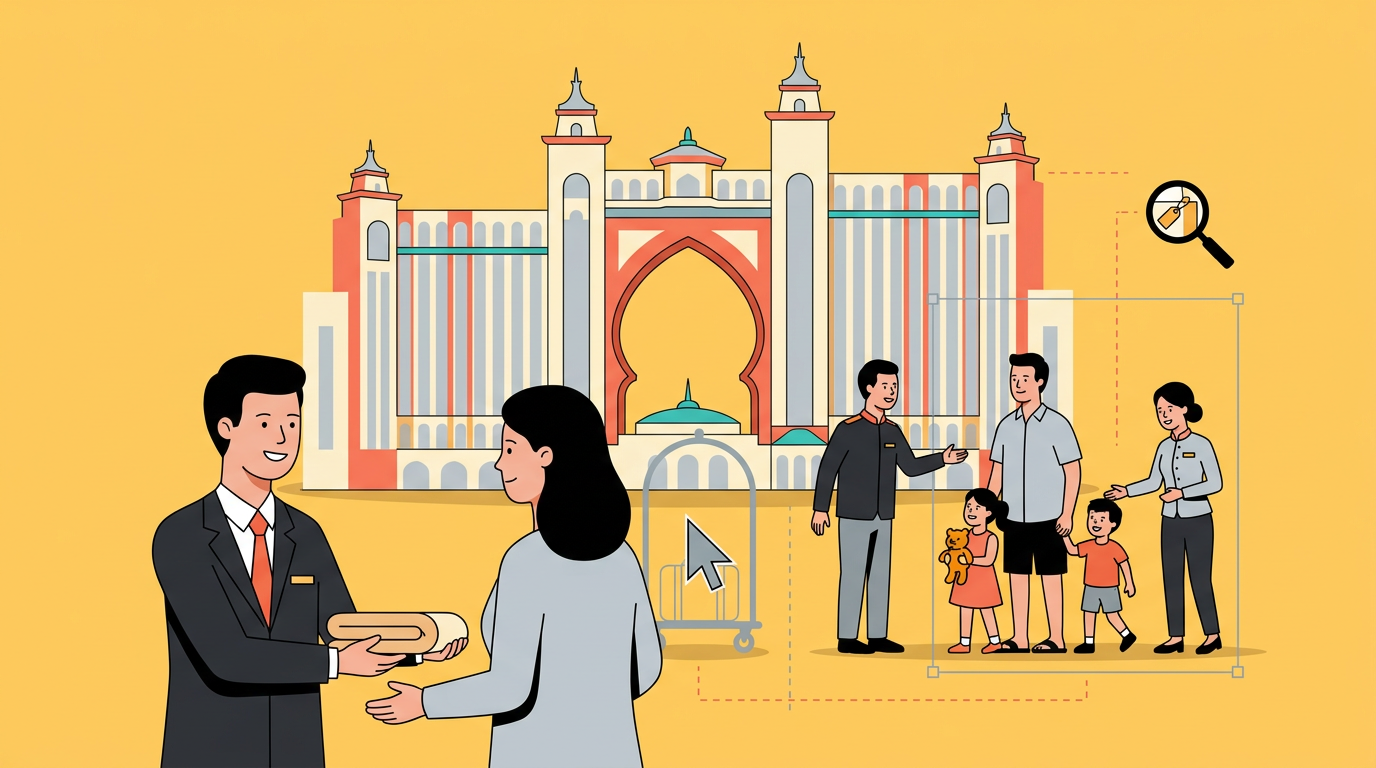
A new analysis written by a Google UX researcher reveals that instead of examining mobile apps, digital product designers should look into the user experience (UX) practices of the luxury hospitality sector. The physical service flow and customer-centric design approaches of Dubai’s luxury hotels offer a powerful UX framework that can be adapted for digital interfaces.
From Physical Space to Digital Products: How to Adapt Hospitality UX
Traditionally, digital design processes focus solely on screens, mobile applications, and websites. However, the hospitality sector stands out for its flawless management of users' expectations in the physical world, their need for friction-free interactions, and their demands for personalization. The service layers observed in Dubai’s high-end hotels, solutions presented to users invisibly, and intuitive wayfinding systems can serve as a source of inspiration for simplifying complex flows encountered during digital product development.
Micro-Moments and Intuitiveness in Design
The luxury hotel experience relies on anticipating guests' needs before they even voice their requests. This approach, emphasized by the UX research, translates into "micro-moments" in digital interfaces. Smart forms that anticipate the user's next step, contextual guidance, and minimalist interface design free from information overload are the digital reflections of the philosophy of guest satisfaction found in hospitality.
Sectoral Implications
In the disciplines of digital marketing and product design, it is no longer considered sufficient for teams looking to increase user engagement to study only their digital competitors. Integrating superior customer experiences from the physical world into digital product architecture provides designers with a brand-new perspective to boost user interaction and reduce digital fatigue.
Frequently Asked Questions
Why has adapting hospitality experiences to digital interfaces become a major trend?
Users' expectations from digital products are now shaped by the most flawless physical service experiences in daily life; therefore, designing intuitive and friction-free flows provides an edge in digital competition.
Which practices of hotels can digital product designers directly transfer to their projects?
Proactive guidance that anticipates user demands, service layers that break down complex processes into intuitive steps, and personalized experience structures can be directly adapted.
*This news report has been prepared based on data published by UX Collective.
💬 Comments
No comments yet. Be the first!
You must be logged in to comment.
🔑 Log In