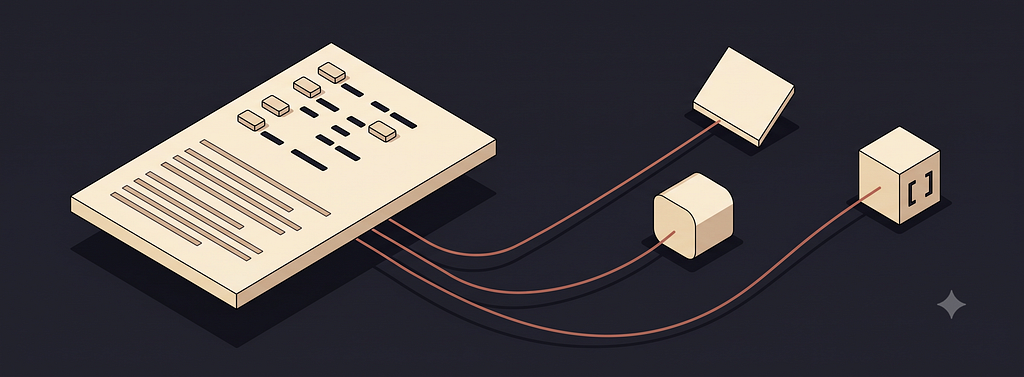
Released as open-source by Google Labs in April 2026, DESIGN.md is a new plain-text standard designed to enable AI coding agents to generate interfaces that align with brand identities. Operating similarly to README.md files in software projects, this format combines machine-readable design tokens (colors, typography, spacing) at the top with human-readable brand rationale and design rules at the bottom into a single file.
Why Do AI Agents Need a Standard Design File?
Today, when an AI is asked to create an interface, agents often resort to default, brand-agnostic components (such as gray buttons and standard cards) because they cannot read Figma files, presentations, or information locked in designers' minds. The DESIGN.md standard is built to eliminate this problem.
The structure of the file is organized to appeal to two primary audiences:
- Tokens for Machines (Top Section): Contains precise numerical values—such as color codes, typography scales, border radiuses, and spacing—that AI agents can use directly while writing code.
- Rationale for Humans (Bottom Section): Features plain-text narratives explaining the logic behind these values, the brand personality, the target audience, and the conditions under which rules can be flexed.
Thanks to this dual-layer structure, when an agent receives a request for a "primary button," for instance, it can precisely apply the brand’s deep forest green and custom corner radius instead of a default gray; because the token value tells the system "what" to do, while the text explains "why" it should be done.
Industry Implications and Future Outlook
In an era where AI-driven development processes are accelerating, integrating design identities into the codebase enhances consistency across projects. Adding a single plain-text file to a project repository automates the preservation of brand integrity, removing the need for design teams to manually brief agents on every single detail.
Frequently Asked Questions
Does the DESIGN.md file replace existing design tools (like Figma)?
No, DESIGN.md does not replace design tools; it complements them. It serves as a code-based bridge format that translates visual identity decisions and tokens generated in tools like Figma into a format that AI agents can read directly.
Where should we start when creating a DESIGN.md file for our own project?
You can start with a brief text summarizing your core color palette, typography scales, and brand personality. Using an existing brand guideline and an AI chat window, an initial draft can be quickly generated and added to the repository.
*This news article was prepared based on data published by UX Collective.
💬 Comments
No comments yet. Be the first!
You must be logged in to comment.
🔑 Log In