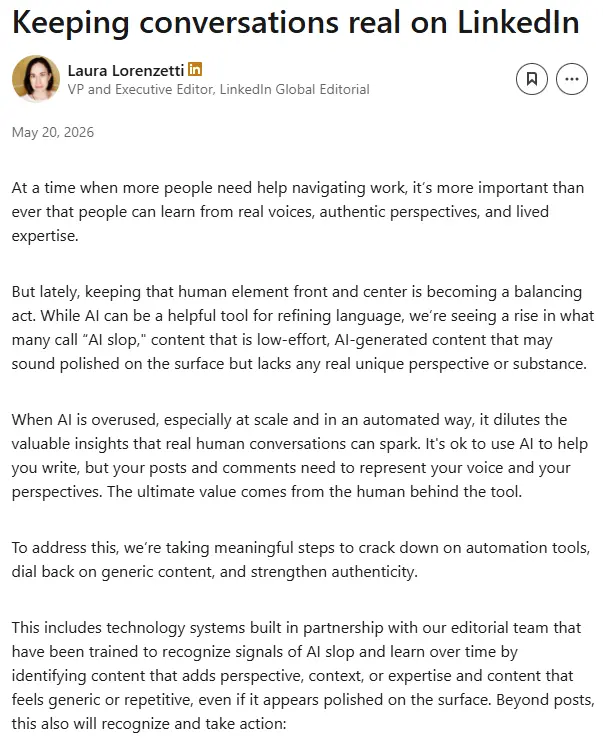
With algorithmic updates rolled out on May 20, 2026, LinkedIn has begun clamping down on mass-produced, low-quality AI content ("AI slop"), automated tools, and comments that lack original perspectives. The platform's new detection systems prevent generic, hollow AI posts from reaching wider audiences by directly restricting their visibility outside of the author's immediate follower network.
What Does the Algorithm Update Mean?
Announced by LinkedIn VP of Product Laura Lorenzetti, the new policies specifically target copy-and-paste AI texts that offer no original value. According to platform data, content creation surged by 14% over the past year, with this growth largely driven by AI-powered tools.
Rather than completely deleting flagged content, the system chooses to limit its visibility. Marked posts are visible only to the user's direct connections and followers, and are not distributed to broader audiences by the recommendation engine. Although LinkedIn reports a 94% detection accuracy rate for its AI models—trained on thousands of posts tagged by human editors—false-positive rates have not yet been disclosed.
Industry Implications for Content Creators
Brands that combine the efficiency of AI tools with genuine subject-matter expertise and authentic human experience will gain a significant distribution advantage under the new algorithmic regime. Conversely, accounts that rely entirely on automation and shallow posts will face a loss of organic reach. Aiming to preserve the quality of its professional network and safeguard its advertising revenue model, this move forces digital marketers to prioritize quality over quantity in their content strategies.
Frequently Asked Questions
Could LinkedIn's AI detection system penalize my original content by mistake?
Although the company reports a 94% detection accuracy rate, no data regarding false-positive rates has been shared. This leaves open the possibility that some legitimate human-written or expert-driven texts might also get caught in the filters.
Instead of relying entirely on AI, how should I integrate these tools into my strategy?
You can minimize the risk of getting flagged by using AI for efficiency steps such as drafting or organizing data, while enriching articles with personal case studies, original data, and unique industry commentary.
*This news article was compiled based on data published by the Neil Patel Blog.
💬 Comments
No comments yet. Be the first!
You must be logged in to comment.
🔑 Log In