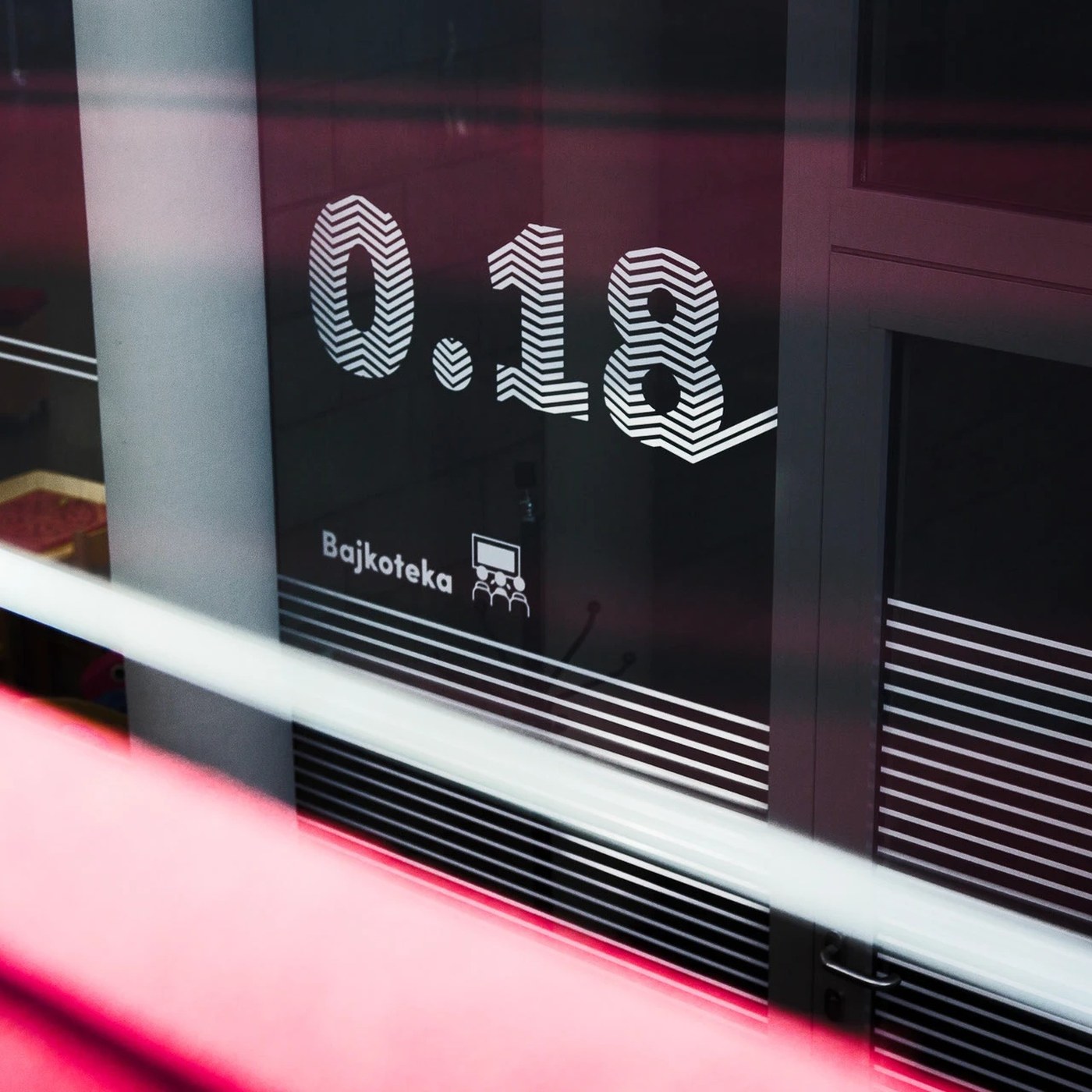
Developed by Blank Studio for Mediateka Tychy, the wayfinding and visual communication system stands out as an innovative project focused on spatial geometry that merges architectural and graphic design in public spaces. Aiming to facilitate visitor movement within the complex structure, the system integrates typography and architectural forms to deliver both a functional and aesthetic experience.
The Role and Features of Spatial Geometry in Design
In the project brought to life by Blank Studio for Mediateka Tychy, the interior architectural lines of the building and graphic design elements work in seamless harmony. Rather than acting as randomly placed objects, the directional signs and informational panels are designed as guides that serve the building's flow and geometric structure.
The core elements used in this approach include:
- Architectural Harmony: The designs are structured with lines that complement the building's overall form rather than disrupting it.
- Legibility and Typography: Quick access to information—the most critical element in public spaces—is supported by minimalist and high-contrast typographic choices.
- Material Selection: The durable and modern materials used integrate with the structural, cultural, and public identity of the building.
Sectoral Reflections and User Experience
In public buildings and multi-purpose cultural centers such as libraries, wayfinding systems are critical components that directly impact user experience. Blank Studio's project demonstrates how strategic physical space design can remain even in the digital age. Simplifying complex structures with a human-centric approach allows visitors to explore the space effortlessly while operationally easing burdens such as information desks.
Frequently Asked Questions
Which design studio created the Mediateka Tychy wayfinding project?
The project was designed by Blank Studio, known for its visual communication and spatial design work in public spaces.
What problems do this type of wayfinding system solve in public buildings?
It reduces the feeling of disorientation for visitors in large and complex structures, allowing them to reach their destinations via the shortest and most intuitive routes, thereby increasing overall user satisfaction.
*This news article was prepared based on data published by Abduzeedo.
💬 Comments
No comments yet. Be the first!
You must be logged in to comment.
🔑 Log In