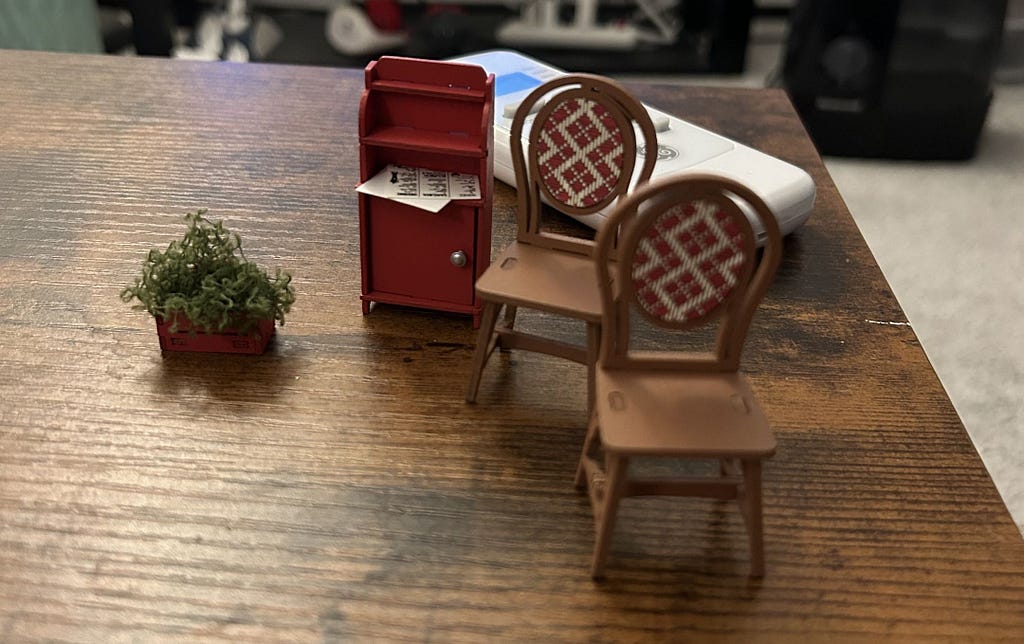
Frances Glessner Lee’s miniature death scene models, titled the "Nutshell Studies of Unexplained Death," are meticulously detailed scale dioramas designed to train homicide investigators against first impressions and early assumptions. Built to a scale of one inch to one foot, these miniature crime scenes go beyond photographs or written reports, aiming to sharpen observation skills, methodically evaluate circumstantial evidence, and understand the relationship between design and cognitive processes.
The Cognitive Power of Model-Making: Breaking Assumptions
The greatest danger investigators face in forensic investigations is cherry-evidence—selecting only the pieces of evidence at a crime scene that fit their initial theories while ignoring other details. In the mid-20th century, Frances Glessner Lee made rigorous observation mandatory in these miniature crime scenes by incorporating worn furniture, functional doors, and precisely positioned figures.
This highlights a critical truth in the worlds of design and cognition: models do not merely represent existing knowledge; they also enable the generation of new knowledge. Working with a three-dimensional model allows the human mind to catch spatial relationships, scales, and inconsistencies between objects that might be missed in plain text or two-dimensional photographs.
Alternative Approaches to Design and Problem-Solving
When seeking solutions to complex problems or designing a new product, generating physical or digital prototypes gives concrete form to our mindset. Rather than simply solving a problem, Lee’s miniatures serve as cognitive tools that enable individuals to recognize their own biases. The model-making process not only makes complexity manageable but also facilitates different people examining the same dataset through a common reference point and evaluating it without bias.
Industry Reflections and Impact on Design Processes
Working with physical or digital models plays a critical role not only in forensic sciences but also in fields such as user experience (UX), product design, and strategic planning. The prototyping phase allows designers to test their assumptions early on and transform abstract ideas into tangible observation spaces.
Frequently Asked Questions
Are Frances Glessner Lee’s miniature models still used for educational purposes today?
Yes, these detailed dioramas are still exhibited at the Office of the Chief Medical Examiner in Baltimore as teaching tools for forensic training and observation exercises.
Why are physical miniatures or prototypes preferred when digital tools and simulations exist?
Physical models allow the human mind to engage with tactile senses and spatial awareness independently of screen constraints, which helps develop a more holistic perspective toward problems.
*This news report has been prepared based on data published by UX Collective.
💬 Comments
No comments yet. Be the first!
You must be logged in to comment.
🔑 Log In