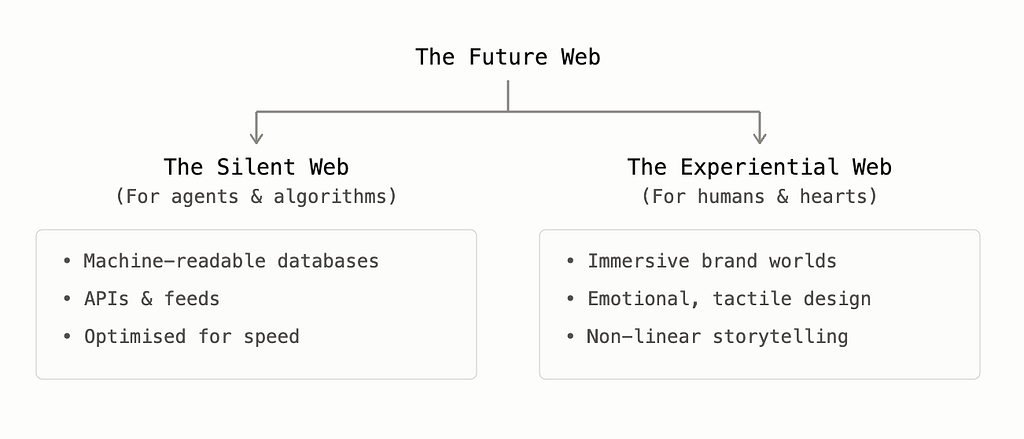
Modern websites have become virtually identical, losing their distinctive characteristics due to conversion-oriented optimizations and ready-made template tools. Designed to meet mobile responsiveness, speed, and SEO requirements, these websites prevent brands from leaving a lasting impression in the digital world.
The Rise of the Templated Web and Homogenization
Ready-made template platforms such as Shopify, Squarespace, and Webflow have accelerated website creation by offering businesses cost advantages, reliability, and engineering ease. However, this has led entire industries to look alike, featuring three-column hero sections, identical product detail pages, and copy-paste checkout flows. Prioritizing conversion security over brand identity to avoid taking risks, businesses have created digital interfaces that are easily forgotten by audiences.
The Impact of AI and Agentic Commerce on Design
Voice search and agentic AI systems are fundamentally transforming how users access information and evaluate products. According to McKinsey data, agentic commerce is projected to reach a $1 trillion market in the U.S. and a $3 to $5 trillion market globally by 2030. While 58% of Gen Z and millennials rely on AI agents for price comparisons and product recommendations, 85% of consumers in markets like the UAE already use AI shopping tools. This new era goes beyond traditional web traffic optimization, heightening the importance of authentic brand identities and custom-coded experiences.
The Balance of Brand and Code for Differentiation
Brands aiming to maintain their competitive edge in the digital marketing and design world must focus on meaningful differentiation rather than purely rational, conversion-driven decisions. In this new ecosystem where AI engines and LLMs drive web traffic, sites utilizing cookie-cutter templates face the risk of commoditization. To survive in the future, brands must embrace the "Brand x Code" philosophy and build original infrastructures that deliver unique user experiences.
Frequently Asked Questions
How are AI-powered search engines and agents transforming standard SEO strategies?
While classic search engine optimization (SEO) focuses on keywords and click-through rates, agentic AI systems directly evaluate data, price comparisons, and consumer trust. This makes it essential for websites to be optimized not just for search engine bots, but for AI agents that make decisions on behalf of users.
Does moving away from template websites create a costly disadvantage for small and medium-sized enterprises?
While ready-made templates offer initial cost advantages, extreme homogenization in the industry diminishes brand memorability, which can increase customer acquisition costs in the long run. Small businesses can balance costs by incorporating unique design touches built on top of templates, rather than requiring a fully custom infrastructure.
*This report was prepared based on data published by UX Collective.
💬 Comments
No comments yet. Be the first!
You must be logged in to comment.
🔑 Log In