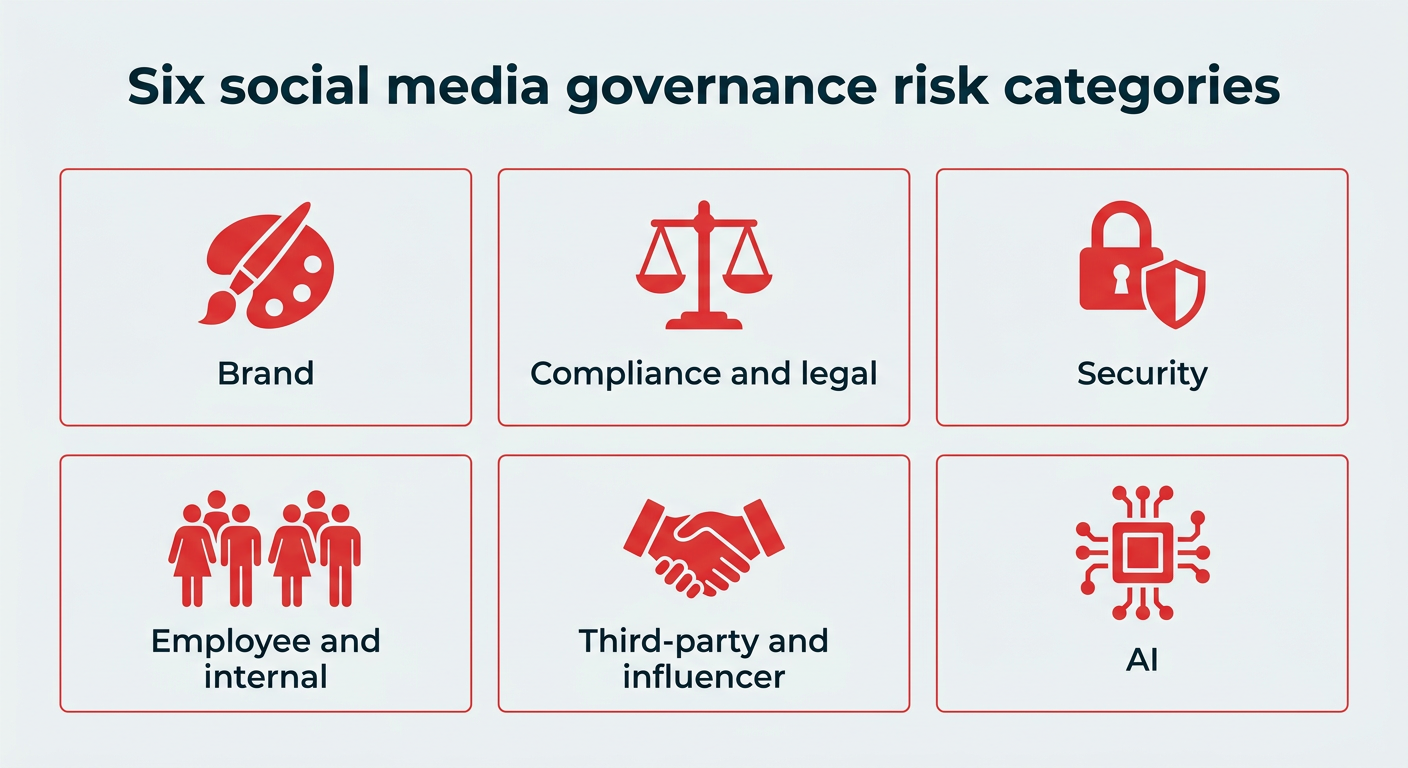
Social media governance is a comprehensive framework encompassing the policies, roles, workflows, and tools that organizations use to control their social media assets. This system enables brands to manage the risks they encounter while scaling, act swiftly during crises, and ensure all content remains within a framework of legal compliance.
Key Elements Standing Out in 2026 Planning
Unlike traditional social media strategies, governance focuses not just on the question of "what to post," but on "who will give approval, who will hold access privileges, and what will be done in the event of a crisis." In 2026 projections, risk management has become even more critical as the share of AI tools in marketing workloads increases.
An effective social media governance plan should include the following components:
- Brand and Security Protocols: Who holds account access and how security vulnerabilities are closed.
- AI Usage Policies: Transparent labeling of AI-generated content and the boundaries of responsible use.
- Approval Workflows: The audit stages content must go through before publication.
- Crisis Management Procedures: Emergency action plans to be activated in situations that could damage brand reputation.
Sectoral Implications
Executing social media governance through a centralized platform prevents a lack of coordination between different teams and regions. In this era where AI-based content creation accelerates, companies must establish flexible yet rigorous oversight mechanisms that balance automated processes with human supervision. The right governance framework enables teams to produce content securely without losing momentum.
Frequently Asked Questions
What is the main difference between a social media strategy and social media governance?
While a social media strategy determines the path a brand will follow to achieve its goals (what will be done), governance is the oversight and approval mechanism ensuring that this strategy is executed in a compliant, secure, and authorized manner.
Why should AI content creation be included in the governance plan?
Because the rise of AI usage increases legal and reputation-focused risks—such as copyright issues, the risk of spreading misinformation, and a lack of transparency—it is essential to define the boundaries of using these tools through corporate policies.
*This news report has been prepared based on data published by the Hootsuite Blog.
💬 Comments
No comments yet. Be the first!
You must be logged in to comment.
🔑 Log In