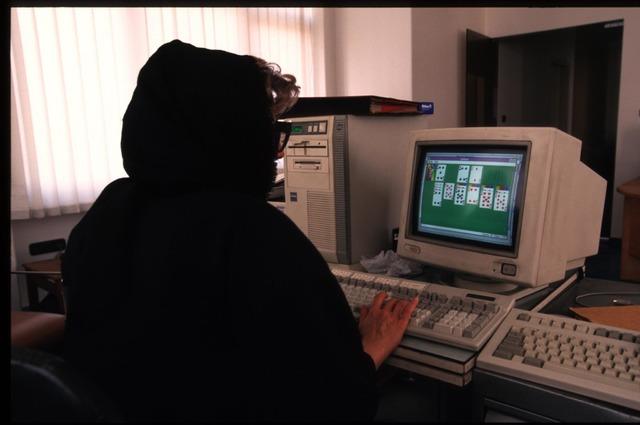
Introduced by Microsoft with Windows 3.0 in 1990, Solitaire was not merely designed as a pastime for killing time; it was a strategic training tool that helped users get accustomed to next-generation graphical user interfaces and mouse usage. The game was conceived as a secret educational tool that taught users the "drag-and-drop" logic in an entertaining way during the transition from keyboard-heavy systems to mouse-based interfaces.
A Strategic Tool That Taught Mouse Usage
In the late 1980s, personal computers were transitioning from command-line systems like DOS to graphical user interfaces. During this period, the mouse was an unfamiliar peripheral for the broad masses accustomed to keyboards. Selecting icons on the screen, moving windows, and dragging files required new skills. Instead of preparing lengthy manuals, Microsoft made Solitaire a standard Windows component, ensuring that users would repeatedly practice the "drag-and-drop" motion while sorting cards.
From an Intern's Project to a Legend
Windows Solitaire was developed in his spare time in 1988 by Wes Cherry, an intern at Microsoft, inspired by a similar game on the Macintosh. When the project caught the company's attention, it was decided to include it in Windows 3.0. The visual design of the game was handled by Susan Kare, a monumental figure in digital design history who also left her mark on Apple's first Macintosh interface. Kare designed simple, pixelated card decks that could be easily selected on low-resolution screens.
Industry Reflections and Impact on Interface Design
In digital product development processes, user experience (UX) and the adoption of new technologies can be solved through intuitive mechanisms rather than complex training processes. The Solitaire example is one of history's most successful early examples of how a new interface habit that users might find challenging (mouse drag-and-drop) can be effortlessly internalized through gamification. This approach laid the foundation for user onboarding processes in modern software design.
Frequently Asked Questions
Were the rules of Solitaire different from the original card game?
No, the rules of the Klondike variation used in the Windows version were identical to traditional card games; the main objective was to complete the cards by suit in four separate piles from Ace to King.
With which operating system version did Windows Solitaire first enter our lives?
The game was introduced to users as a standard part of the operating system with Windows 3.0, released on May 22, 1990.
*This news was prepared by Webtekno based on data published by Artificial Intelligence.
💬 Comments
No comments yet. Be the first!
You must be logged in to comment.
🔑 Log In