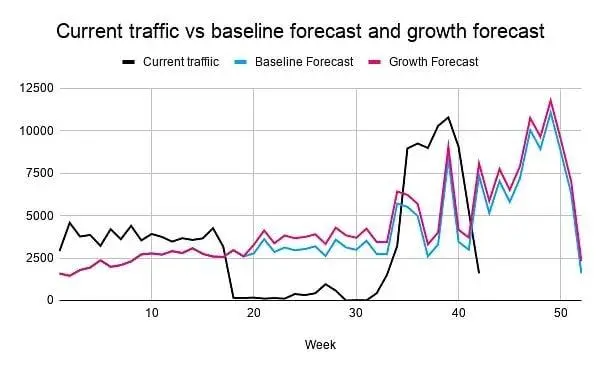
SEO forecasting in the age of AI is the process of predicting future search engine visibility by accounting for traffic dynamics driven by AI Overviews, zero-click habits, and large language models. In this new era where traditional linear models fall short, modern traffic forecasting is evolving from linear to probabilistic and scenario-based frameworks.
Changing Elements in Next-Gen SEO Forecasting
As AI transforms search results, traffic projections prepared with past assumptions no longer yield realistic outcomes. AI summaries and zero-click behaviors absorb user demand that once generated direct clicks.
Consequently, even as rankings increase, click-through rates may remain stagnant, or revenue may not scale at the same rate as rising traffic. Therefore, modern SEO forecasting models must rely on these core principles:
- Probabilistic and Scenario-Based Approach: Results should not be projected along a single line, but rather expressed as ranges that include conservative, expected, and aggressive scenarios.
- Influence Metrics: Metrics such as growth in branded searches, click-through rate (CTR) behaviors, and conversion rates act as bridges to measure how SEO visibility translates into commercial value.
- Short-Term Focus (90-180 Days): AI citations, growth in branded searches, and share of voice are the most critical input data today.
Sectoral Implications and Strategic Approach
This shift in SEO forecasting fundamentally alters how digital marketing teams measure success. Rather than adopting strategies solely focused on keyword rankings, hybrid models must be embraced that track the brand's overall impact within the digital ecosystem and its inclusion rate in AI answers (AI citations). To accurately interpret traffic drops or fluctuations, forecasting models must be restructured around current consumer search habits.
Frequently Asked Questions
Why do increasing zero-click searches make SEO traffic forecasts misleading?
Because users obtain the information they look for directly from AI Overviews without needing to click through to a website, organic traffic often falls short of expectations even when traditional keyword rankings are high.
Why should scenario-based models be used instead of traditional linear traffic forecasts?
Rapid algorithm shifts in the AI ecosystem and sudden fluctuations in search engine behavior make it impossible to chart a single prediction; therefore, providing distinct scenario ranges—conservative, expected, and aggressive—is much safer for risk management.
*This article was prepared based on data published by the Neil Patel Blog.
💬 Comments
No comments yet. Be the first!
You must be logged in to comment.
🔑 Log In