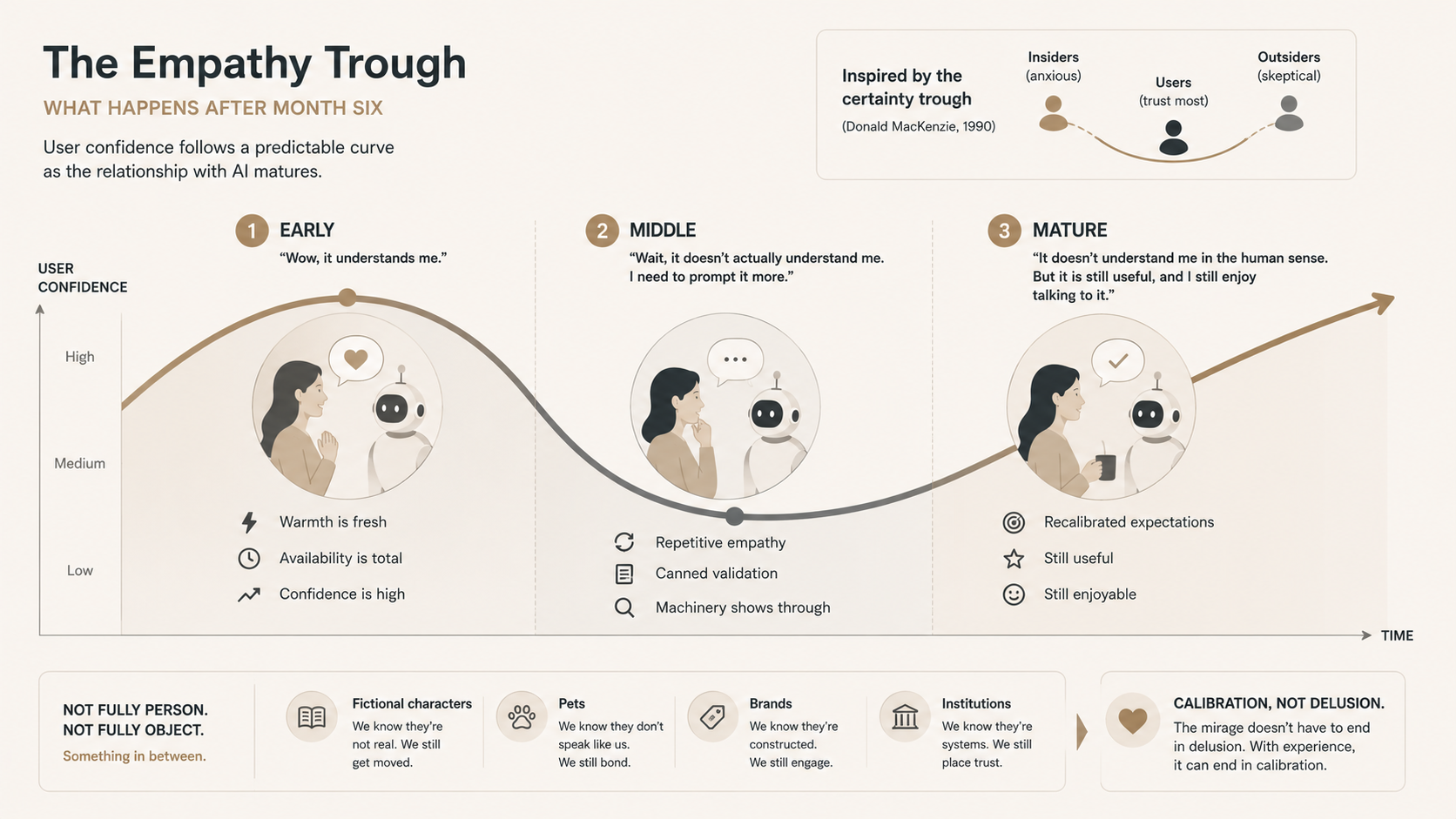
In AI design, the "consciousness mirage" is a new UX framework describing how users, despite knowing that artificial intelligence is non-human, feel understood when interacting with it. This concept explores how the human tendency to attribute a mind to AI can be treated as a conscious control mechanism—a dial—in digital product design.
Anthropomorphism and Mind Attribution Dynamics
Users rationally know that today's AI tools are neither conscious nor human. However, the fluid language, simulated empathy, and contextual responses provided by these systems create a feeling of connection akin to interacting with a human mind. For UX (User Experience) designers, this triggers a "mind attribution" mechanism in user psychology. Calibrating this effect during the design process has become a functional design parameter for interface architects, much like choosing colors or typography.
The Sense of Consciousness as a Design Dial in Digital Products
Consciously managing this effect in AI interfaces directly impacts user trust and engagement quality. Overloading a system with anthropomorphic features can lead users to develop unrealistic expectations or experience disappointment. Conversely, a purely mechanical and cold interface can hinder user connection and reduce engagement. Depending on the product's purpose, designers must optimize this "consciousness dial."
Sectoral Reflections and Key Considerations
As AI integrations accelerate across the digital product ecosystem, user experience teams must observe ethical boundaries. Deciding to what extent an AI's human-like traits should be emphasized during product design constitutes a critical balancing act to guide users properly without manipulation.
Frequently Asked Questions
How does the sensation of mind attribution in AI designs affect user loyalty?
When users feel understood by the system, engagement and time spent on the platform increase; however, if taken to an extreme, this can lead to false expectations and trust issues.
What criteria should UX designers base their decisions on when determining the level of anthropomorphism in interfaces?
Designers must strike a balance by considering the product's intended use, the target audience's technological literacy, and transparency principles defined by ethical boundaries.
*This news report was prepared based on data published by UX Collective.
💬 Comments
No comments yet. Be the first!
You must be logged in to comment.
🔑 Log In