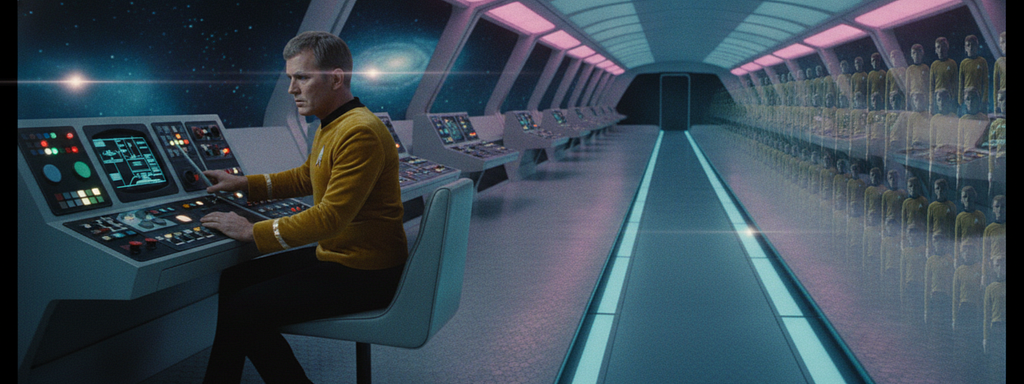
For decades, Star Trek envisioned the future of artificial intelligence by treating language and emotions as the ultimate benchmarks of sophistication. However, real-world AI development has moved in the exact opposite direction. While today's AI models quickly mastered skills once thought "difficult"—such as fluent speech and text generation—they still struggle in areas Star Trek took for granted, such as reliable reasoning, physical dexterity, and error-free execution.
The Inverse Path Between Expectations and Reality
In the Star Trek universe, characters like Data struggling with linguistic rules (such as contractions) in a somber fashion, or emotionless AI having to travel a long road to achieve human-like maturity, served as fictional dramatic devices. In reality, Large Language Models (LLMs) mastered writing fluent texts, making jokes, and even striking a warm tone very early on, almost as a basic party trick.
In contrast, the subjects underestimated by science fiction constitute today's biggest technological hurdles. Multi-step logical reasoning, delivering accurate information without hallucinating, and physical dexterity like folding laundry or holding a coffee cup without breaking it (robotics integration) rank among the areas where real-world AI struggles the most. According to research by designer Christopher Noessel, the overlap rate between AI portrayals in sci-fi films and real-world manifestations is only around 37 percent.
Sectoral Implications
Science fiction’s treatment of AI in an anthropomorphic and dramatic form has also shaped society’s expectations of AI technology. Yet software-focused AI, which is now finding its way into the pockets of billions of people, positions itself less like Star Trek’s passive, command-waiting ship computer, and more as proactive, predictive, and—at times—convincingly errant intelligent tools. This makes it imperative to consider the technology's realistic limits and capabilities when developing digital marketing, design, and AI tools.
Frequently Asked Questions
Why are the AI predictions of sci-fi films so different from today's reality?
Because authors and screenwriters structured the timeline of technological development not based on technical difficulties, but according to narrative drama and the balance of hope and fear in human psychology; emotional depth and conversational ability were always much more compelling tools for storytelling.
What is the fundamental difference between today's AI tools and Star Trek computers?
While Star Trek computers are portrayed as tools that wait for the user, never fawn, and possess absolute accuracy, modern AI models operate as software that can act without waiting for commands, are fluent, but sometimes "confidently incorrect" (generating hallucinations).
*This news report has been prepared based on data published by UX Collective.
💬 Comments
No comments yet. Be the first!
You must be logged in to comment.
🔑 Log In