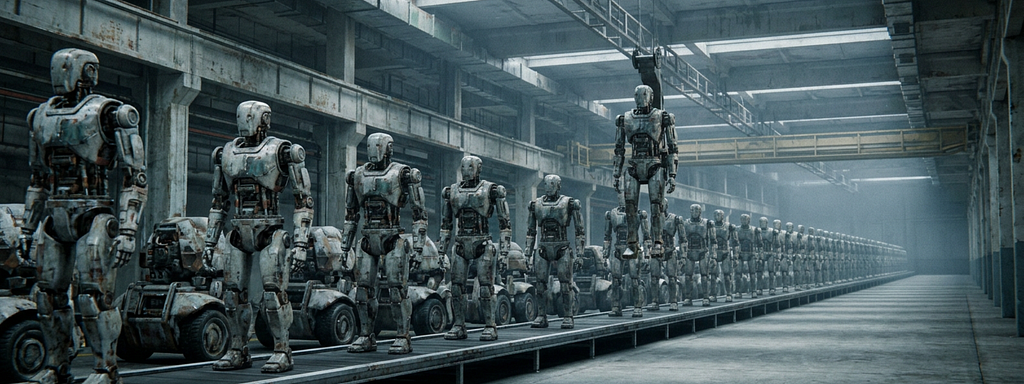
The real-world development of artificial intelligence has moved in a direction entirely different from the singular, embodied robot vision that popular sci-fi productions have fed us for years. While droids in the Star Wars universe, such as R2-D2 or C-3PO, are portrayed as individual machines trapped within a single body, modern AI operates as software that can be copied, forked, and simultaneously updated for millions of users.
The Copiable Mind and the Illusion of Individuality
Sci-fi films assume that an AI possesses a unique and singular "self," much like a human. Droids learn on their own, carry their own memories, and cannot simply be replaced by an identical substitute if lost. However, real-world open-source AI models (such as Meta's Llama) can be copied tens of thousands of times on platforms like Hugging Face, customized, and rolled back to yesterday's version at a moment's notice. The file-like nature of digital intelligence completely shatters the assumption of a "scarcity of self."
The Reverse Process: Software First, Body Later
Productions like Star Wars assumed that machines needed a body first in order to walk, speak, and gesture. Yet, actual technological history has written the exact opposite. AI entered our lives first as disembodied software capable of generating text, code, and dialogue; because building a robotic body proved to be a far more difficult engineering challenge than developing pure intelligence. While films prematurely imagined talking mouths paired with physical bodies, the real world cracked digital intelligence first.
Implications for the Design and Technology World
The "singular robot" mental model planted in the human mind by popular culture can lead to false expectations when dealing with today's AI tools. Industry professionals and designers should position AI not as an isolated individual, but as a cloud-based network architecture that can be instantly updated, replicated, and scaled. This fundamentally alters how we view concepts of ownership, version control, and scalability in AI integration processes.
Frequently Asked Questions
Does the perception of robots in sci-fi have a psychological or strategic impact on real-world AI integrations?
Yes, users and managers tend to think of AI as a human-like "individual" or "employee." This can create false expectations by ignoring the software's copyability, instant update capabilities, and scalable nature.
Even if humanoid robots become widespread in the future, will the software-based AI model change?
Even as the number of physical machines increases, the intelligence powering these machines will still not be bound to a single body. The core cloud-based master model behind them will be shared and updated simultaneously by billions of devices.
*This news report has been prepared based on data published by UX Collective.
💬 Comments
No comments yet. Be the first!
You must be logged in to comment.
🔑 Log In