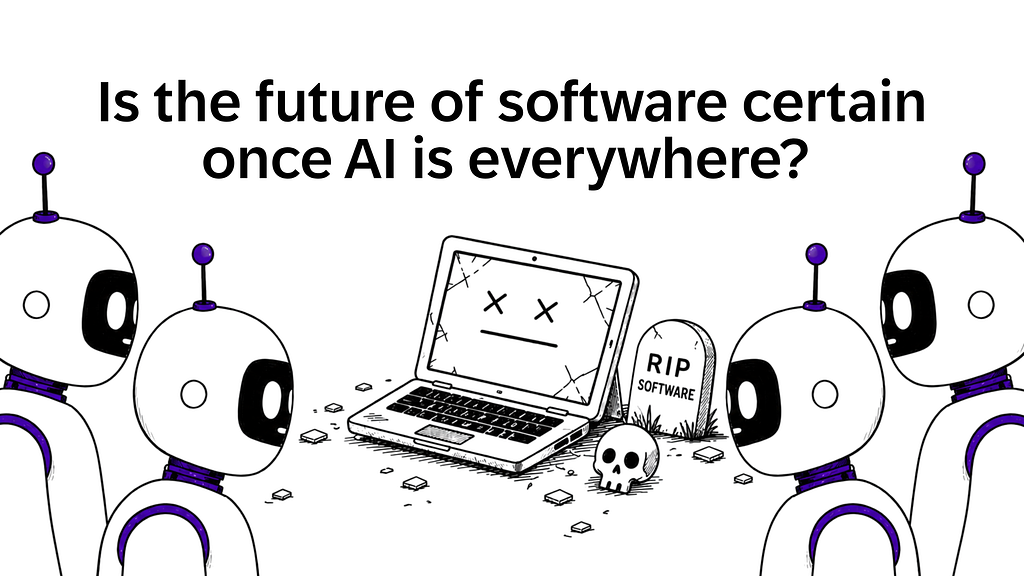
The question of whether "artificial intelligence will kill traditional software," which has been fiercely debated in the tech world since August 2025, has resurfaced following a global market tremor dubbed the "SaaSpocalypse." Analysts agree that rather than destroying the software industry, AI is driving an evolutionary process that is fundamentally reshaping user experience and interaction models.
From Click-Driven Interfaces to Natural Language Commands
This transformation in the enterprise software sector represents a leap forward as monumental as the transition from keyboards and menus to touchscreens. According to Deloitte's 2026 Global Software Industry Outlook report, AI is evolving into the primary interface layer with which users directly interact, while legacy applications are relegated to background task-oriented agents.
With this shift, the traditional rules of software are being rewritten:
- Dynamic Starting Points: Instead of navigating through complex menus, users simply define their end goal, allowing the system to determine the necessary tools, data, and steps on its own.
- Background Automation: Routine, multi-step tasks are executed in the background without human intervention, with the system consulting the user only at critical decision points.
- Single Point of Access: Rather than getting lost among dozens of different tabs and applications, work is conducted through a single conversational surface that brings together the right components.
The New Role of Design and Business Context
This evolution marks a paradigm shift, particularly for professionals working in software design. Pixel-focused design philosophies are giving way to chat, voice, and dynamically shifting interface models. While traditional, application-centric interaction models weaken, it has become clear that for AI to generate real-world value, it requires the robust business context, governance rules, and trusted data provided by enterprise processes.
Sector Implications and Future Outlook
Although the integration of AI across all products has triggered a temporary contraction and valuation debates in the traditional software market, experts emphasize that this is a period of adaptation rather than extinction. For software companies and product developers, the ultimate competitive advantage lies in providing AI models with the correct business context and secure data infrastructure.
Frequently Asked Questions
What strategies should companies follow in AI integration to protect their existing software investments?
Rather than completely replacing their existing monolithic software, companies should prioritize API-driven, modular architectures that allow AI agents to pull data and execute business processes seamlessly.
How should designers adapt to new interfaces that will replace traditional screen designs?
Moving away from merely crafting static screens, designers must focus on building dynamic flows that understand user intent, conversational interfaces, and flexible interaction models that shape themselves based on context.
*This report was prepared based on data published by UX Collective.
💬 Comments
No comments yet. Be the first!
You must be logged in to comment.
🔑 Log In